



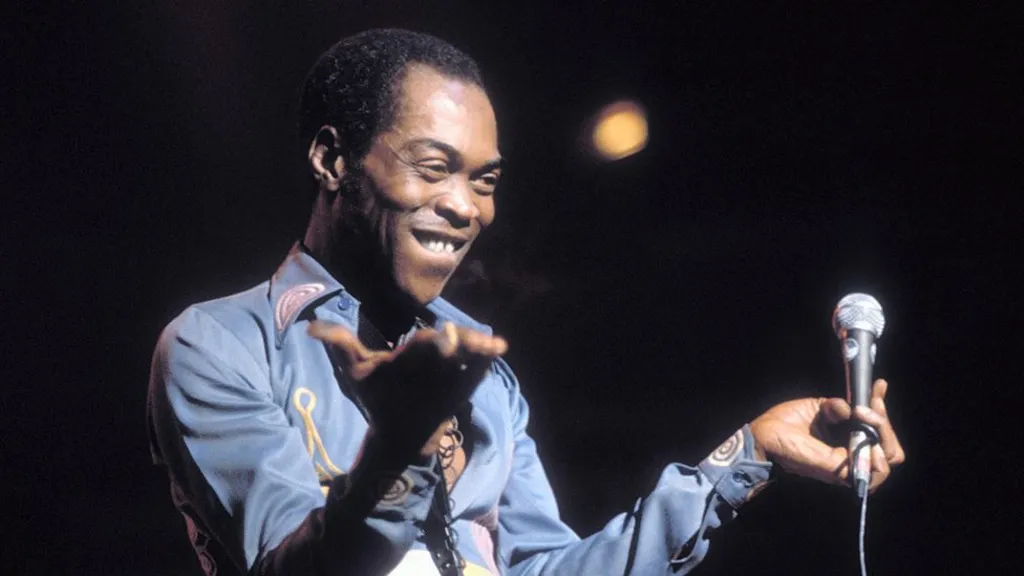
Nigerian music legend Fela Anikulapo Kuti will posthumously receive a Lifetime Achievement Award at the Grammys, making him the first African artist to earn the honour nearly three decades after his death.
Fela, widely regarded as the king of Afrobeat, passed away in 1997 at 58. His son, Seun Kuti, described the recognition as bringing balance to a Fela story and a double victory.
Fela has been in the hearts of the people for such a long time. Now the Grammys have acknowledged it, he said.
Rikki Stein, a longtime friend and manager of Fela, added that the award was “better late than never, highlighting growing global recognition of African music.
Fela’s influence on modern Afrobeats is undeniable. The Grammys introduced a Best African Performance category in 2024, and Nigerian superstar Burna Boy is nominated this year for Best Global Music Album.
This year’s Lifetime Achievement honours will also go to Carlos Santana, Chaka Khan, and Paul Simon. Fela’s family and associates will attend the ceremony to collect the award.
The global human tapestry needs this, not just because it’s my father, Seun Kuti said.
Fela Kuti was more than a musician. He was a cultural theorist, political activist, and pan-Africanist, whose music fused rhythm with resistance. His 1977 album Zombie mocked Nigeria’s military, prompting a raid on his Kalakuta Republic compound and the death of his mother, Funmilayo Ransome-Kuti. Fela turned grief into protest with songs like Coffin for Head of State.
He wasn’t doing what he was doing to win awards. He was interested in liberation. Freeing the mind. He was fearless. He was determined,” Stein said.
Across a career spanning three decades, Fela released over 50 albums, blending jazz, funk, highlife, West African rhythms, and sharp political commentary. He pioneered Afrobeat with drummer Tony Allen, influencing musicians across Africa and the diaspora.
His early influences included Ghanaian highlife, which shaped Afrobeat’s melodic horns and danceable grooves. On stage, Fela was unmistakable: often bare-chested or draped in wax prints, saxophone in hand, leading 20-plus musicians at Lagos’ Afrika Shrine.
When Fela played, nobody applauded. The audience wasn’t separate. They were part of it, Stein recalled.