



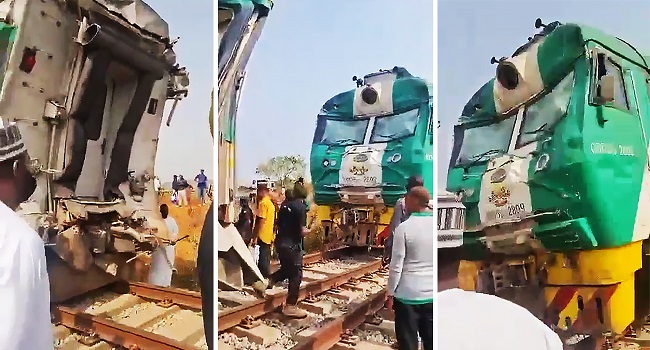
The Nigerian Railway Corporation (NRC) has confirmed that several passengers sustained injuries during a train incident near Asham Train Station on the Abuja-Kaduna line on Monday morning.
In an official statement, NRC’s Managing Director and CEO, Kayode Opeifa, explained that the incident occurred around 10:30 a.m. when a rear locomotive made contact with the passenger coach directly behind it due to a coupling malfunction.
Opeifa stated that all injured passengers received prompt medical attention and were transported to nearby healthcare facilities. He further assured the public that no fatalities resulted from the incident.
The NRC immediately activated emergency response procedures, deploying technical teams to the site. The Safety Investigation Bureau was also present to begin a comprehensive investigation in accordance with established safety protocols.
According to the statement, the train eventually arrived at Idu Train Station at approximately 10:39 a.m.—38 minutes late—after the affected locomotive and coach were detached.
The NRC reaffirmed its commitment to safety, assuring that all necessary steps are being taken to address the situation and maintain safe train operations. The corporation pledged to provide further updates as more information emerges.
This incident comes amid a series of derailments on the Nigerian rail network, particularly along the Abuja-Kaduna corridor. In response, the Senate initiated a nationwide probe into rail system failures in 2025.
Last November, the Senate established an ad hoc committee to investigate the persistent derailments affecting the country’s rail lines. The committee, led by Senator Adams Oshiomhole, was tasked with examining the root causes of these incidents, evaluating the condition of rail infrastructure and imported materials, and reviewing Chinese loans used to finance railway projects. The committee was given six weeks to complete its findings and submit a detailed report.
Lawmakers also directed the NRC to urgently resolve the technical issues behind recent derailments and restore the rail network to full operational capacity.