



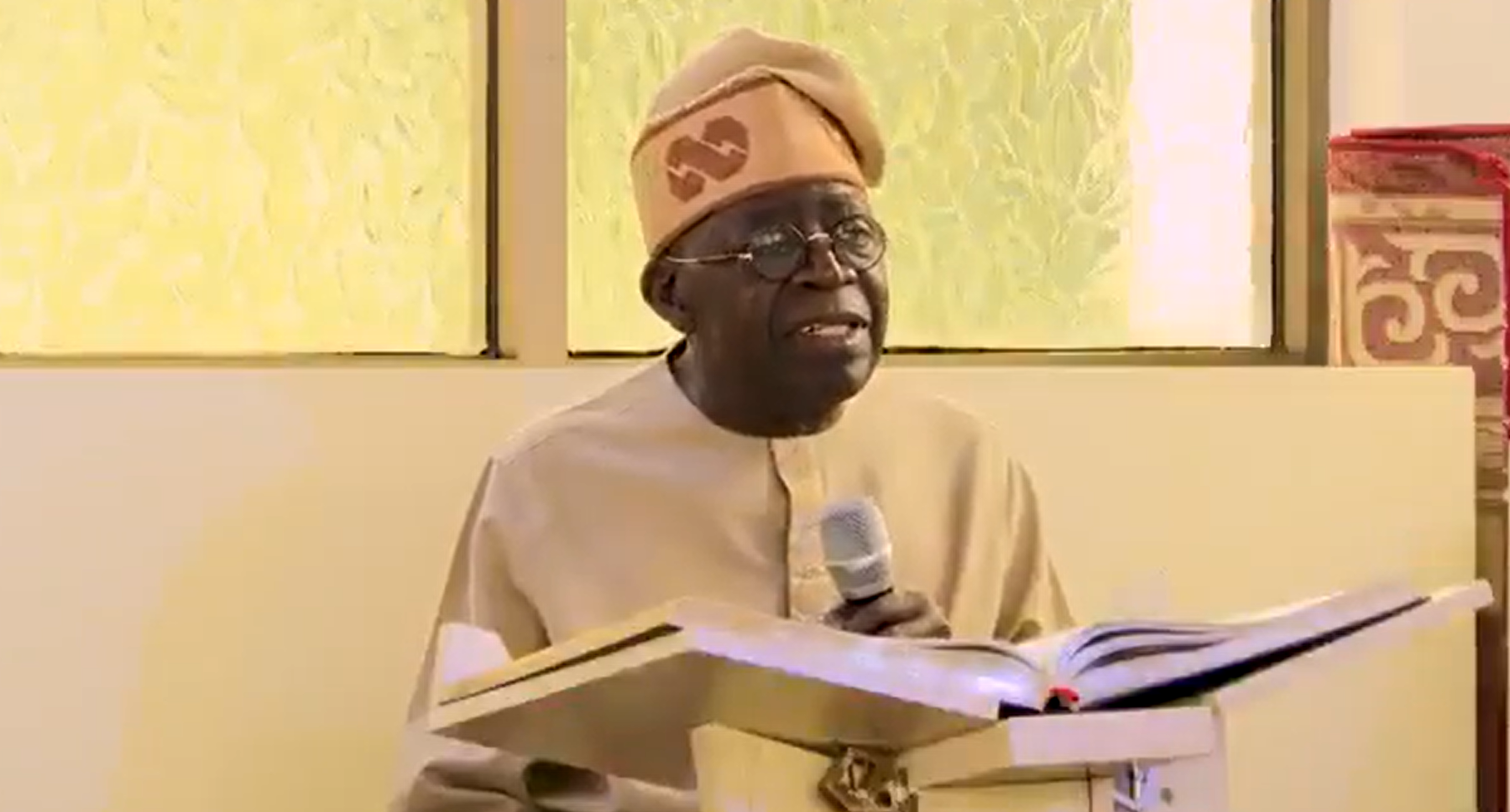
President Bola Tinubu on Monday convened a closed-door meeting with Nigeria’s Chief of Defence Staff, General Olufemi Oluyede, and a French General at the Presidential Villa in Abuja, as part of intensified efforts to address escalating security challenges across the country.
According to sources close to the Presidency, the engagement underscored ongoing collaboration with international partners, particularly France, on military support and intelligence sharing. The meeting with the French officer, which began around 2 pm, marked President Tinubu’s first official engagement since returning from Bayelsa on Friday.
In a separate emergency session, President Tinubu also met with Nigeria’s security chiefs and intelligence heads. Present were the Chief of Defence Staff; Chiefs of Army, Navy, and Air Staff; the Directors-General of the Department of State Services and the National Intelligence Agency; and the Inspector-General of Police.
The high-level meetings followed a deadly attack in Borno State on Sunday, where a colonel and six soldiers lost their lives to an improvised explosive device planted by insurgents—another blow to security forces operating in the North-East.
Sources, speaking anonymously, confirmed the presence of the French General but declined to reveal his identity. No photographs or footage were released from the meeting.
The talks come just weeks after President Tinubu announced that France had agreed to supply military hardware and training support to Nigerian forces fighting insurgency in the North-East, following discussions with French President Emmanuel Macron. Addressing state governors in Lagos, Tinubu stressed his administration’s determination to leverage international goodwill and credit lines to secure essential equipment and training.
These recent engagements reflect President Tinubu’s commitment to seeking collaboration and support wherever possible to address Nigeria’s security issues, a Presidency source told us.
Monday’s meetings took place amid worsening insecurity nationwide, including a controversial airstrike on Saturday that killed more than 100 civilians and a new U.S. advisory authorizing the voluntary departure of non-emergency embassy staff from Abuja.
On Saturday, a Nigerian Air Force strike targeting Boko Haram insurgents hit the Jilli market near the Yobe-Borno border, resulting in civilian casualties. While the military defended the operation as a precision strike on a terrorist logistics hub, Amnesty International condemned it as reckless and called for an independent investigation. The Presidency, in comments to Bloomberg, also defended the operation, stating that the market had become a logistics center for Boko Haram and ISWAP terrorists.
U.S. Security Warning
Just days earlier, on April 8, the U.S. Department of State authorized the voluntary departure of non-emergency staff and family members from its embassy in Abuja, citing deteriorating security conditions. This move raised 23 Nigerian states to a “Level 4: Do Not Travel” warning, the highest risk category, with new states including Plateau, Jigawa, Kwara, Niger, and Taraba added to the list.
The U.S. highlighted ongoing threats from Islamist insurgents in the North-East, criminal gangs in the North-West, and violence in regions across southern and southeastern Nigeria. The embassy suspended visa appointments in Abuja, though routine and emergency services continue at the Lagos consulate.
The Federal Government responded, emphasizing that the alert was based on U.S. internal protocols and did not reflect the overall security situation in Nigeria. “There is no general breakdown of law and order, and the vast majority of the country remains stable,” Information Minister Mohammed Idris stated.
Commander, Soldiers Killed in Borno
Lt Col Sanni Uba, spokesperson for Joint Taskforce Northeast Operation Hadin Kai, confirmed the latest attack in a statement on Monday. Troops came under assault by terrorists at the Charlie 13 location in Monguno late Sunday. After heavy exchanges of fire, the insurgents were repelled, but the commanding officer was killed by an improvised explosive device while moving to assess the situation, along with six other personnel.
Lt Col Uba praised the commander’s courage and selfless leadership, noting that his actions embodied the highest military traditions. He added that Operation Hadin Kai deeply mourned the loss of the officer and his men, whose sacrifice will be remembered by the Armed Forces and the nation.
The attack is the latest in a series of deadly assaults on military positions in Borno State. Recently, Brigadier General O. Braimoh was killed in a terrorist ambush at the 29 Joint Taskforce Brigade in Benesheik, Kaga Local Government Area.
Fresh Attacks in Benue State
Meanwhile, fresh attacks in Benue State claimed at least 14 lives—including a Mobile Police officer—across Edikwu-Ankpali, Ikobi, Adija, and Upu communities in Apa and Otukpo Local Government Areas. Suspected armed herders launched multiple assaults between Friday and Sunday, killing residents and leaving several missing.
Local sources reported that nine people were killed in Edikwu-Ankpali, with one fatality each in Ikobi and Adija. In Upu, a Mobile Police officer was shot while responding to a distress call. Additional police personnel have since been deployed to the affected areas.
The attacks come despite recent assurances from police authorities and a directive from Assistant Inspector-General of Police, Zone 4, Morris Dankombo, for a coordinated crackdown on banditry and violent crime across Benue, Nasarawa, and Plateau states.
Survivors Recount Jilli Market Airstrike
Survivors of the Jilli market airstrike in Borno State, now receiving care at a Maiduguri hospital, described the attack as shocking and devastating. They said multiple bombs were dropped by jets during the Saturday operation, which left over 100 dead and burned down the market.
Victims who spoke to us insisted the market was a key economic hub and denied knowledge of any terrorist activity there. Abu Goni, a survivor, said the attack began unexpectedly after evening prayers and that the market is simply a venue for trading domestic animals.
Borno State Governor Babagana Zulum, however, stated that the Jilli market was closed five years ago due to its reputation as a hub for insurgents and their suppliers.