



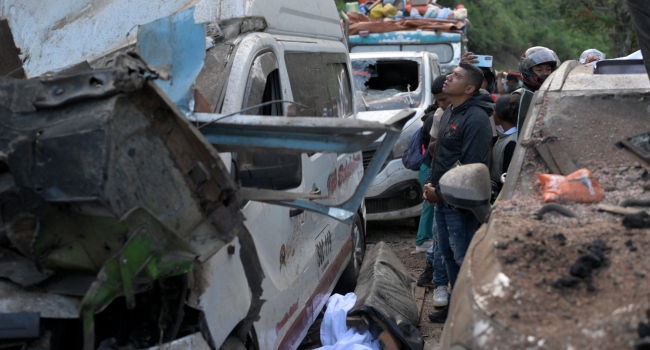
The death toll from a highway bombing in Colombia over the weekend has climbed to 20, with another 36 people wounded, according to the governor of the local department, who shared the update Sunday on X.
Authorities attribute the attack to armed groups, and it comes just a month before Colombia’s presidential elections, scheduled for May 31.
Octavio Guzman, governor of Cauca Department, called the bombing the region’s “most brutal and ruthless attack against the civilian population in decades.” The explosion left a crater 200 cubic meters in size.
Among the dead are fifteen women and five men, all adults. Three of the injured are in intensive care. Five children were also hurt but are reported to be out of danger.
The powerful blast devastated buses and vans along the Pan-American Highway in Colombia’s turbulent southwest. Several vehicles were overturned by the force of the explosion.
Military chief Hugo Lopez said at a Saturday news conference that the bomb detonated after attackers blocked the road with a bus and another vehicle, halting traffic.
“This is a terrorist attack against the civilian population,” Lopez said.
The bombing comes just over a month before voters go to the polls to elect a successor to leftist President Gustavo Petro.
President Petro condemned the attack, calling the perpetrators “terrorists, fascists and drug traffickers” in a statement on X. He urged the country’s top soldiers to pursue those responsible and blamed the attack on Ivan Mordisco, Colombia’s most-wanted criminal, likening him to the late drug lord Pablo Escobar.
The violence follows a bomb attack on a military base in Cali on Friday, which wounded two people and sparked a wave of assaults in the Valle del Cauca and Cauca departments. Lopez said 26 attacks have occurred in the two regions in the past two days.
Defense Minister Pedro Sanchez announced increased military and police deployments in affected areas.
Colombia has a long history of armed groups—funded by drug trafficking, illegal mining, and extortion—using violence to influence elections. FARC dissidents who rejected a 2016 peace deal have been trying to derail stalled peace talks with President Petro.
Security is a key issue in the upcoming election. Last June, political violence made national headlines when conservative presidential frontrunner Miguel Uribe Turbay was shot while campaigning in Bogota; he died two months later.
Leftist Senator Ivan Cepeda, a central figure in Petro’s negotiations with armed groups, currently leads the polls, followed by right-wing candidates Abelardo de la Espriella and Paloma Valencia, both of whom have pledged tough action against rebels. All three candidates have reported receiving death threats and are campaigning under heightened security.