



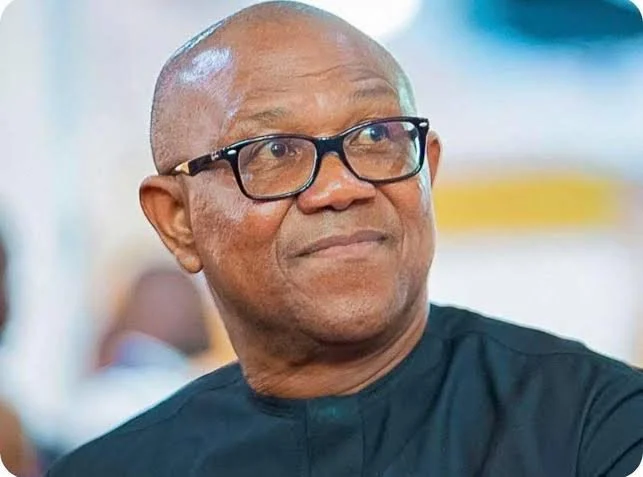
The presidential candidate of the Nigeria Democratic Congress (NDC), Peter Obi, and the Benue State Government clashed on Tuesday over the disruption of Obi’s scheduled visit to Yelwata, Benue State.
The confrontation erupted after youths barricaded a major road in Makurdi, preventing Obi’s convoy from continuing to the community.
Obi, who said he was traveling to Benue to condole with families affected by the Yelwata massacre, accused suspected government-backed thugs of blocking his passage. He claimed the obstruction was allegedly orchestrated by a government aide. In response, the Benue State Government denied any involvement, insisting Obi failed to observe protocol by not formally notifying the authorities of his visit. The government further accused Obi of seeking political controversy.
The Yelwata massacre, which occurred between June 13 and 14, 2025, left over 200 people dead and drew nationwide condemnation. Obi’s visit was intended to show solidarity with the victims’ families and highlight the ongoing security crisis in Benue.
Despite the controversy, the Benue State Police Command confirmed it had been informed about Obi’s visit and had deployed officers to provide security. However, the police said it was investigating why some youths still managed to block the convoy on Gboko Road, near the Nigerian Air Force Base and Makurdi Airport, where protesters chanted, “We don’t want Peter Obi.” The blockade caused hours-long traffic disruption and forced Obi to turn back to the airport and return to Jos, Plateau State.
Speaking at the scene in a video posted by News Central Television, Obi said he was told that youths, reportedly led by a Special Assistant to the government, had been mobilised to prevent his visit. He condemned the incident as unacceptable, arguing that the youths were themselves victims of poverty and insecurity and should not be used for political purposes.
Obi emphasised that his visit was humanitarian, not political, and said his itinerary was not concealed from relevant authorities. The NDC’s Benue State governorship candidate, Prof. Terhemba Shija, supported this claim, asserting that security agencies had been duly informed and that the visit was not a campaign rally.
However, the Benue State Government, represented by Commissioner for Information and Orientation Solomon Iorpev, maintained that Obi failed to officially notify them. Iorpev argued that as a high-profile visitor, Obi should have coordinated with the state for security purposes. The Chief Press Secretary to Governor Hyacinth Alia, Kula Tersoo, also denied government involvement, describing Obi’s allegations as unfounded and an attempt to stir internal party disputes.
The police account partially contradicted the government’s claim, with Commissioner of Police Cletus Nwadiogbu confirming that the force had been informed and had assigned officers to Obi’s security detail. He said the command was investigating why the blockade occurred despite police presence.
After leaving Benue, Obi continued his humanitarian tour in Jos, Plateau State, where he decried ongoing violence and mass displacement. Addressing displaced persons, he stressed that government, not just prayers, was needed to protect citizens and stop the violence forcing Nigerians from their homes. He also highlighted the impact on education and called for urgent federal action.
The incident drew widespread condemnation. The Peoples Democratic Party’s Benue governorship candidate, Michael Aondoakaa (SAN), called it an assault on democracy and the constitutional rights of Nigerians. He argued that all citizens, regardless of political affiliation, have the right to move freely and participate in political activities. The NDC and other civil society groups also demanded a thorough investigation and prosecution of those responsible. Former Sokoto State governor Aminu Tambuwal and advocacy organisations NEAC and Tap Initiative described the incident as undemocratic, urging authorities to ensure freedom of movement and political participation.
This is not the first time Obi has accused the Benue State Government of blocking his visits; a similar clash occurred in April 2025. The latest incident comes as political activities intensify ahead of the 2027 general elections, following the lifting of restrictions by the Independent National Electoral Commission (INEC).