




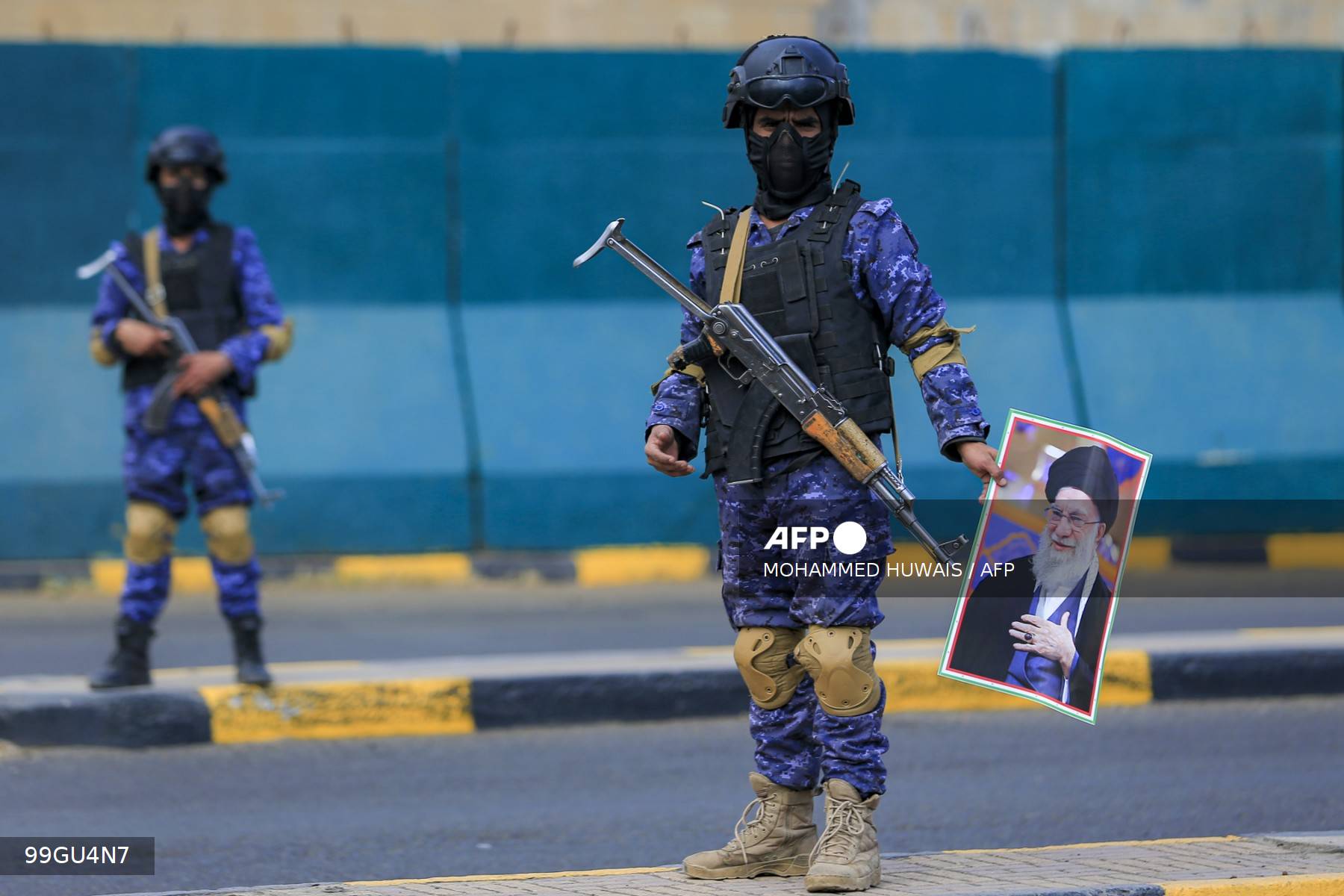
Israeli forces launched airstrikes across Lebanon, including in the capital Beirut, on Monday following rocket attacks by Hezbollah. The escalation came after the Iran-backed group fired rockets into Israel in response to the killing of Iran’s supreme leader.
Early Monday, loud explosions were heard in Beirut, according to AFP journalists. The Israeli military confirmed it had begun striking targets of the Hezbollah terrorist organisation across Lebanon.
In southern Lebanon, residents fled in cars—some carrying mattresses tied to their roofs—after Israel issued a mass evacuation warning, AFP reported.
The latest Israeli strikes came after rockets and drones were launched from Lebanon, marking Hezbollah’s first claimed attack on Israel since a ceasefire agreement in November 2024, which ended more than a year of conflict.
Weakened by its prolonged confrontation with Israel, Hezbollah had initially entered the conflict in support of Hamas after the Palestinian group’s deadly October 2023 attack on Israel and the subsequent war in Gaza. Despite the ceasefire, Israel has continued to strike Hezbollah positions in Lebanon, citing truce violations.
On Monday, the Israeli military announced it had precisely struck senior Hezbollah members in Beirut and southern Lebanon.
Lebanon’s state-run National News Agency reported Israeli strikes throughout the country, particularly in Beirut’s southern suburbs, a Hezbollah stronghold. Israel subsequently warned residents of about 50 towns and villages in Lebanon’s south and east—areas dominated by Hezbollah—to evacuate immediately and move at least a kilometer away from their homes for safety.
Hezbollah claimed responsibility for the rocket and drone attacks on Israel, saying they were in retaliation for the killing of Iranian supreme leader Ayatollah Ali Khamenei in a wave of US-Israeli strikes on Tehran over the weekend. The group stated the attacks also aimed to defend Lebanon and respond to repeated Israeli strikes.
A Hezbollah official had previously told AFP that the group would not intervene militarily in the event of “limited” US strikes on Iran, but considered any attack on Khamenei a red line.
Lebanese Prime Minister Nawaf Salam, whose government has advocated for Hezbollah’s disarmament, condemned Monday’s rocket fire as irresponsible, saying it endangered Lebanon’s security and could give Israel a pretext for further attacks. Without naming Hezbollah, Salam pledged to hold those responsible accountable and to protect the Lebanese population. He called an emergency cabinet meeting to discuss the situation and potential responses.
President Joseph Aoun warned that attacks from Lebanese territory risked dragging the country into a regional conflict. While condemning Israeli strikes, he cautioned against actions that could make Lebanon a battleground for wars unrelated to the country’s interests.
The Israeli military reported that “several projectiles” launched from Lebanon landed in open areas, with no immediate reports of casualties or damage. Later, air raid sirens sounded in northern Israel, warning of an incoming drone.
Military chief Eyal Zamir stated, Hezbollah opened a campaign against Israel overnight, and is fully responsible for any escalation.
The Lebanese National News Agency reported significant displacement from Beirut’s southern suburbs and the country’s south, as residents sought safety. Footage on local media showed traffic jams of cars leaving affected areas. In Sidon, an AFP journalist observed long lines of families arriving from the border region.
The prime minister’s office released a list of public schools available to shelter those displaced by the violence.
Lebanese authorities have repeatedly stated their desire to avoid being drawn into the broader regional conflict, which escalated after a major US-Israeli strike on Iran. That attack sparked a wave of missile and drone retaliations from Iran against Israel and Gulf states hosting US bases.
— AFP




