




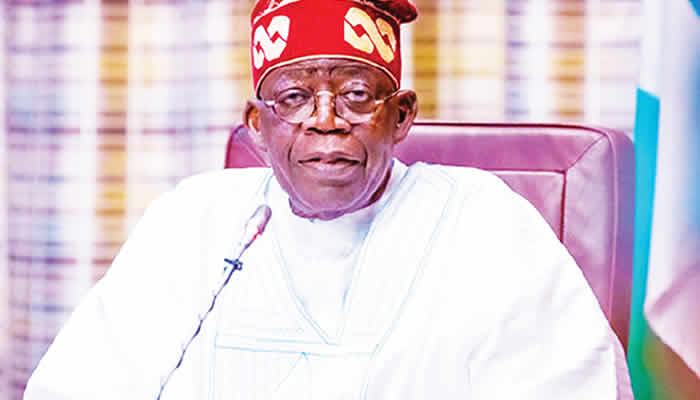
President Bola Tinubu says his reforms of the past two years in office are laying a sustainable foundation for a more prosperous future for Nigerians.
Tinubu, who was elected as President on May 29, 2023, stated that his Renewed Hope Agenda was working to reduce the cost of living, promote economic justice and build a business-friendly economy that attracts investment and supports every Nigerian.
We are laying the foundation for a more sustainable future…together, we are creating a system where prosperity is shared, and no one is left behind, Tinubu stated in his nationwide address to mark his second year in office today.
He framed these efforts as building blocks for a more sustainable future and thanked Nigerians for their unwavering support.
In commending Nigerians for their steadfastness through two turbulent years, he said their support had been vital to confronting inherited challenges head-on.
Fellow Nigerians, as we mark the second anniversary of our administration, I salute your resilience and undaunted spirit.
While my administration has implemented the reforms to restore and reinvigorate our economy and strengthen our social fabric as a strong and united country, I must thank my fellow citizens for your unrelenting support and belief in the grand vision we share to uplift our nation and renew our collective hopes and aspirations.
Two years ago, you entrusted me with the sacred responsibility to lead our nation at a time of historic challenges. Together, we have faced these headwinds with courage and determination. The economic and general situation of the country I inherited required that we redirect the country’s affairs with a bold and new vision. I immediately implemented two necessary policies to stop our country from further drifting into the precipice,” he noted.
The President argued that if the Federal Government and the other two tiers of government were to remain viable and cater to the citizens’ welfare, it must do away with decades-long fuel subsidies and the corruption-ridden multiple foreign exchange windows.
The two were no longer sustainable and have become a chokehold on our nation’s neck, strangling our nation’s future, he argued.
He reminded citizens that the administration is at the halfway mark of its mandate and reaffirmed that the economic turnaround is well underway.
Today, May 29, 2025, offers our administration the opportunity to share again how far we have gone and our progress in steering our country along the critical path of socio-economic development.
When we embarked on this journey, propelled by a burst of hope and abiding faith in Nigeria’s unity and progress, I made a pledge before God and fellow countrymen and women to confront Nigeria’s challenges head-on by rebuilding trust, fostering prosperity, and restoring our nation’s economic health.
Today, I proudly affirm that our economic reforms are working. We are on course to building a greater, more economically stable nation, said Tinubu.
He explained that under the Renewed Hope Agenda, his administration remained open about its drive to tackle economic instability, improve security nationwide, reduce corruption, reform governance, and lift our people out of poverty.
We have remained honest by acknowledging some of the difficulties experienced by our compatriots and families.
We do not take your patience for granted. I must restate that the only alternative to the reforms our administration initiated was a fiscal crisis that would have bred runaway inflation, external debt default, crippling fuel shortages, a plunging Naira, and an economy in a free-fall,” he said.
Tinubu detailed key indicators showing that inflation is easing, oil investments are up, and fiscal performance is stronger than at any point in recent memory.
The President acknowledged that, although living-cost pressures persist, the economy is showing clear improvement.
He noted that inflation is easing as prices of rice and other basic foods fall. According to him, the oil-and-gas sector has rebounded, with rig activity more than quadruple its 2021 level and fresh investments exceeding $8bn.
He argued that these gains have stabilised the economy, leaving it better placed for future growth and more resilient to external shocks.
He announced a new strategic framework to guide Nigeria’s long-term fiscal health and fairness.
There is a deliberate focus on our youth, who a friendlier tax environment for digital jobs and remote work will empower.
Through export incentives, Nigerian businesses will be able to compete globally.
Our National Single Window project streamlines international trade, reduces delays, and enhances Nigeria’s competitiveness, said the President.
He continued, “Most importantly, we are laying the foundation for a more sustainable future by introducing a new national fiscal policy. This strategic framework will guide our approach to fair taxation, responsible borrowing, and disciplined spending.
To promote fairness and accountability, we are establishing a Tax Ombudsman, an independent institution that will protect vulnerable taxpayers and ensure the system works for everyone, especially small businesses.
These reforms are designed to reduce the cost of living, promote economic justice, and build a business-friendly economy that attracts investment and supports every Nigerian. Together, we are creating a system where prosperity is shared, and no one is left behind.
Reviewing public finances, the President said 2025 results are on course: crude-oil receipts are matching budget projections as output rises, and the fiscal deficit has dropped sharply, from 5.4 per cent of GDP in 2023 to 3.0 per cent in 2024, on the back of stronger revenue collection and greater transparency. First-quarter earnings, he added, topped N6tn.
He further explained that the government has halted Ways-and-Means borrowing, a key driver of past inflation. With fuel subsidies removed, the NNPC has become a net contributor to the Federation Account, and expanded domestic refining is now shoring up the nation’s fuel security.
The President reported notable gains in Nigeria’s debt profile, stressing that emergency borrowing has been curtailed and key ratios have improved. He said the debt-to-GDP figure, temporarily lifted by currency revaluation to about 53 per cent, is now paired with a much healthier debt-service-to-revenue ratio, which has fallen from nearly 100 per cent in 2022 to below 40 per cent in 2024.
IMF obligations have been cleared, he added, while external reserves have soared from roughly $4bn in 2023 to more than $23bn by year-end 2024. Reforms have also boosted state-level income by more than N6tn, enabling governors to trim debt, pay salaries and pensions on schedule, and channel fresh resources into roads, schools, and other vital projects.
On revenue policy, the President described a sweeping overhaul aimed at broadening the tax base, shielding vulnerable households, and spurring inclusive growth.
He noted that the tax-to-GDP ratio has already jumped from 10 per cent to about 13.5 per cent in a single year, crediting improved administration and a shift toward a fairer, more growth-oriented system.
Multiple levies that once stifled small businesses are being scrapped, while essential goods and services, including food, education, healthcare, rent, public transport, and renewable energy, now carry either 0 per cent or no value-added tax, leaving more money in workers’ pockets.




