



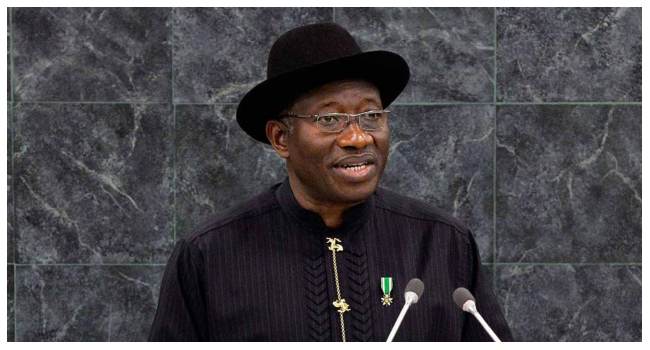
The interim factional National Working Committee (NWC) of the Peoples Democratic Party (PDP), led by Tanimu Turaki (SAN), on Tuesday screened 12 governorship aspirants ahead of the 2027 elections—and granted automatic clearance to former President Goodluck Jonathan as the party’s sole presidential aspirant.
Read more: 2027: ADC Warns of Political Upheaval as PDP’s Turaki Endorses JonathanAnnouncing the results of the screening in Abuja, committee chairman and former Vice President Namadi Sambo—represented by ex-Niger State Governor Babangida Aliyu—told journalists that Jonathan received a screening waiver, clearing the path for his return to the presidential race.
The African Democratic Congress (ADC) quickly reacted, stating that Jonathan’s potential candidacy would upend Nigeria’s political landscape and force all major parties to rethink their strategies. Jonathan, who served as president from 2010 to 2015, reportedly received the waiver from a PDP screening panel led by Aliyu, sparking intense debate within political circles about the possible realignment of forces ahead of the general election.
Though the PDP national leadership has yet to officially confirm Jonathan’s status, speculation intensified after Umar Sani, a former presidential aide and party chieftain, alleged that Jonathan had already obtained a presidential nomination form for the 2027 elections. Sani, who served as Senior Special Assistant on Media and Publicity to former Vice President Sambo, made this claim during an appearance on Trust TV, noting that Jonathan’s renewed political consultations across party lines suggest a possible return to active politics nearly twelve years after leaving office.
While Jonathan has not formally declared his ambition or announced which platform he may contest under, Sani hinted that the PDP’s ongoing internal crisis could explain the former president’s cautious approach. Sani dismissed suggestions that the party was exploiting Jonathan’s popularity, insisting the former president is the right choice for the moment and that only the Supreme Court could overturn prior rulings on his eligibility. He maintained that the pending matter before Justice Peter Lifu would likely be dismissed for lack of jurisdiction.
Sani further rejected claims that Jonathan’s supporters were using his name for political relevance, arguing that many Nigerians remain emotionally attached to him because of their memories of his administration. “Most Nigerians know him and are nostalgic about Jonathan. At the time he left office, many people felt the PDP was not performing, but now Nigerians have seen the difference clearly,” Sani said.
According to the screening committee, Jonathan was granted a waiver due to his extensive political background—having served as deputy governor, governor, vice president, and president—making further screening unnecessary. A similar waiver was granted to Taofeek Arapaja, former Oyo State Deputy Governor and party secretary, who was unable to attend the screening in person.
Among the governorship aspirants screened were two from Taraba, and one each from Adamawa, Kano, Akwa Ibom, and Delta States. The committee said screening would continue as other aspirants present themselves within the designated period.
Kebbi State governorship hopeful and former PDP Deputy National Publicity Secretary, Ibrahim Manga, confirmed his clearance after submitting his nomination form. Delta aspirant Benedict Etanabene, formerly of the Labour Party, said he joined the PDP after the Labour Party dissolved its state structures, questioning its viability and criticizing its support for the sitting president. In Yobe State, governorship candidate Sharif Abdullahi announced his intention to run again in 2027, with plans to prioritize education, healthcare, and agriculture.
The Turaki faction previously disclosed that 2,122 aspirants are expected to be screened for state Houses of Assembly, 748 for the House of Representatives, 198 for Senate, 112 for governorship, and one for the presidency.
The latest developments follow an April 30 Supreme Court decision, delivered in a narrow 3–2 split, invalidating the PDP national convention held in Ibadan in November. The convention, backed by Oyo State Governor Seyi Makinde, had produced Turaki’s leadership. In response, the Makinde bloc’s National Executive Committee appointed a 13-member caretaker committee, headed by Turaki, to oversee party affairs.
Reacting to Jonathan’s emergence, the ADC stated via its verified X handle (@ADCVANGUARD) that his potential candidacy would shake up not only the PDP but also the ruling All Progressives Congress (APC) and other opposition parties. “Jonathan’s possible return will shake the PDP, disturb APC calculations, unsettle Labour Party sympathisers, and force every political camp to rethink strategy,” the party said, adding that Jonathan remains one of the few Nigerian politicians whose name still carries national significance.
The ADC argued that the PDP’s screening waiver for Jonathan is a political signal, marking the return of old forces and setting the stage for what could be the most competitive Nigerian election since 1999. The party noted that Jonathan’s reputation for moderation and national appeal could present a formidable challenge to President Bola Tinubu and the APC, especially amid mounting public frustration over inflation, insecurity, and the rising cost of living.
“For the APC, this is another headache. Tinubu is already battling public anger over hardship, insecurity, inflation, and broken expectations. Now, imagine facing a former president with nostalgia value, a soft public image, and a familiar national network. That is not a small challenge,” the ADC concluded.
Jonathan, who conceded defeat in 2015 to Muhammadu Buhari, has since remained an influential figure across Africa, focusing on diplomatic and peace-building missions. Calls for his return to active politics have grown alongside increasing public dissatisfaction with current governance and economic conditions.