



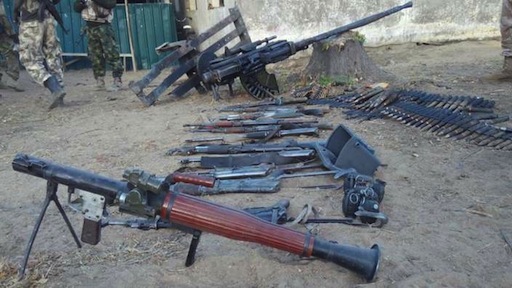
The United Nations has disclosed that weapons looted during Libya’s 2011 conflict have ended up in the possession of extremist groups in Nigeria, highlighting the enduring dangers of illicit arms flows in the region.
Izumi Nakamitsu, the UN Under-Secretary-General and High Representative for Disarmament Affairs, made this revelation at UN Headquarters in New York on Tuesday, as delegates convened to address the global proliferation of illegal firearms.
Nakamitsu expressed concern that weapons often continue to devastate communities long after conflicts have ended, fueling violence and undermining peace. She specifically pointed to Libya, where arms diverted or stolen during and after the 2011 uprising that toppled Muammar Gaddafi have surfaced across the Sahel—reaching countries such as Niger, Burkina Faso, and Nigeria. Some of these weapons, she noted, have been traced to extremist groups, demonstrating how arms from one conflict can destabilize neighboring nations even years later.
“The end of a conflict does not mean the end of the circulation of those weapons; they linger and continue to harm people,” Nakamitsu warned.
According to the UN, the unchecked spread of small arms in parts of sub-Saharan Africa threatens peacebuilding efforts long after active fighting has ceased. Weapons retained by armed groups, militias, or local communities for self-protection can fuel renewed violence and instability. Nakamitsu also emphasized the link between illicit arms and human rights abuses, terrorism, and sexual and gender-based violence.
“It’s not just a security issue,” she said. “It’s about peacebuilding, human rights, and development.”
Nakamitsu added that even years after conflicts have faded from the headlines, the weapons used in them often continue to circulate, crossing borders, driving crime, and undermining fragile peace. She voiced particular concern over the rise of so-called ghost guns, 3D-printed firearms, and increasingly sophisticated trafficking networks, which present new challenges for governments seeking to track and control illicit arms.
“Disassembled weapons or parts are especially difficult to trace,” she explained.
In response to these challenges, UN member states adopted a programme of action in 2001 to strengthen national laws, improve stockpile security, combat illicit trafficking, and enhance international cooperation. This was followed by the 2005 International Tracing Instrument, which set global standards for marking, recording, and tracing illegal weapons.
This framework assists investigators in identifying the origins and pathways of illicit arms, while also reducing the risk of diversion from legal stockpiles. The UN continues to support these efforts through technical assistance, policy guidance, and capacity-building programs to help governments secure their arsenals, improve weapons tracing, and bolster border controls.