



The Federal Government has announced plans to abolish the long-standing policy that separates Junior Secondary Schools (JSS) from Senior Secondary Schools (SSS), in response to alarming statistics showing that over 20 million Nigerian children drop out before reaching senior secondary education.
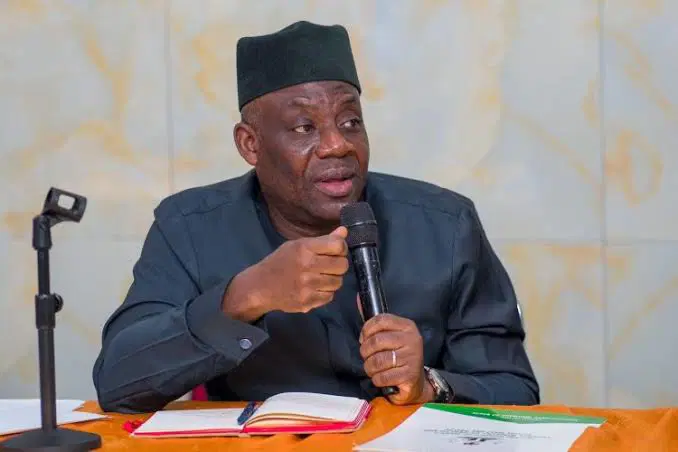
Education Minister Dr. Tunji Alausa revealed this policy shift on Tuesday in Abuja during the inauguration of the Universal Basic Education Commission (UBEC) Ministerial Implementation and Monitoring Committee.
Dr. Alausa explained that the current disarticulation policy, which mandates JSS and SSS to operate independently with separate principals, management, and facilities, has failed to achieve its goals and has actually hindered access to education.
He noted that the Federal Government will propose abolishing the policy at the next meeting of the National Council on Education (NCE), Nigeria’s highest education policymaking body. We have 20 million dropouts from primary school to JSS. Where are those students? the minister asked.
He further highlighted the stark disparity between the number of public primary schools (80,000) and junior secondary schools (15,000), pointing to severe bottlenecks in the education system. This mismatch has resulted in overcrowded junior secondary schools while many senior secondary school facilities remain underutilized.
Dr. Alausa referenced Kaduna and several northern states as regions where the policy has led to poor transition rates from basic to secondary education. “This disarticulation policy has failed. We will phase it out. We cannot justify creating director-level positions at the expense of our education system. Our focus must be on what is best for every Nigerian child,” he stated.
The minister emphasized that this reform is part of the Tinubu administration’s broader strategy to improve access, retention, and learning outcomes in education nationwide. He admitted that previous efforts to address the out-of-school children crisis have fallen short, but expressed confidence that the current administration would reverse the trend: “This government will not fail. We are fixing it,” Alausa declared.
During the ceremony, Dr. Alausa also inaugurated the UBEC Ministerial Implementation and Monitoring Committee, chaired by Prof. Rashid Aderinoye. The committee is charged with supervising the implementation of UBEC-funded Smart Schools, Bilingual Schools, and Alternative Schools across the country, ensuring that projects are completed, handed over to state governments, and become operational.
Although UBEC has funded hundreds of such educational projects nationwide, Dr. Alausa lamented that many remain incomplete, abandoned, or have yet to admit students—a situation he described as an unacceptable waste of public resources. He stressed that improving education requires more than building schools; completed facilities must be fully equipped and accessible to learners.