



Nigeria’s status as a powerhouse in African football will once again be highlighted as it prepares to host the Confederation of African Football’s (CAF) 48th Ordinary General Assembly on November 21.
The event, set to take place in Abuja, will gather football leaders from across the continent, underscoring Nigeria’s enduring influence and increasing importance in shaping the future of African football.
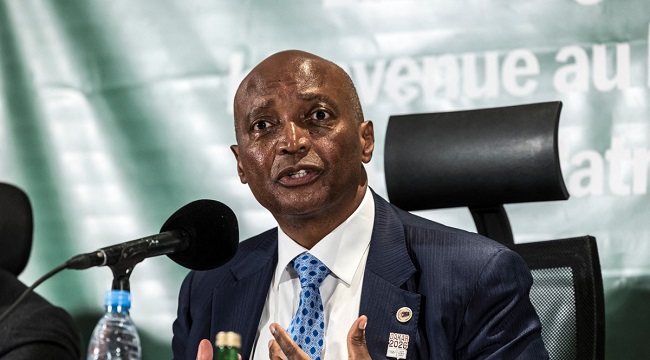
Announcing the decision at a press briefing in Johannesburg, CAF President Patrice Motsepe called Nigeria a “proud football nation” and expressed his enthusiasm for bringing the assembly to Abuja.
We’re going to meet in Abuja in Nigeria for the Ordinary General Assembly in November,” Motsepe said, adding, There’s a reason why I chose Nigeria. We have to do something special in every one of the 54 countries on the continent, just as we do in South Africa, Kenya, Cameroon, and elsewhere.
The CAF General Assembly, often described as the Parliament of African Football, is the highest decision-making body in African football.
It brings together the presidents and representatives of Africa’s 54 member associations to deliberate on competitions, governance, and the sport’s future direction. Each nation has one vote, ensuring fairness and equity in decision-making.
CAF expressed its gratitude to both the Nigerian government and the Nigeria Football Federation (NFF) for agreeing to host the event, stating on its website:
“CAF is grateful to the government of Nigeria and the NFF for their cooperation and partnership.”
The 48th Ordinary General Assembly is expected to be a landmark event, contributing significantly to the development and growth of football across Africa. Last year’s assembly was held in Kinshasa, Democratic Republic of Congo, and was also chaired by Motsepe.
Motsepe: World Cup ‘Incomplete’ Without Nigeria
During the briefing, Motsepe also lamented Nigeria’s absence from the recently concluded 2026 FIFA World Cup, describing the tournament as incomplete without the Super Eagles.
I keep telling my Nigerian friends, you know, a World Cup for me without Nigeria, without Cameroon, and many others is incomplete because Nigeria has always made us proud, he said, reflecting on Nigeria’s consistent presence and impact on the global stage.
Nigeria missed out on a second consecutive World Cup after falling short in the African qualifiers, losing to South Africa and then to DR Congo in the continental playoffs.
As a result, this is the first time since their debut in 1994 that the Super Eagles have missed two consecutive World Cups.
African Teams Achieve Historic Progress at the World Cup
Despite Nigeria’s absence, African teams achieved remarkable progress at the 2026 World Cup. Of the 10 African nations that qualified, nine reached the Round of 32—the highest qualification rate for the continent to date.
African teams accounted for 28.1 percent of the countries in the knockout stages, second only to Europe’s 40 percent. Egypt and Morocco advanced to the next round, marking a new milestone for African football.
Motsepe praised the achievement, saying:
Significant progress and successes were achieved by the African national teams at the FIFA World Cup 2026, and I am very proud of their performances.
The nine African national teams that qualified from the group stage to the Round of 32 made history, as this is 90 percent of the African teams that participated—the highest percentage to date.
He noted previous qualification rates were 40 percent in 2022, none in 2018, and 40 percent in 2014, adding that CAF has identified areas for further improvement and is confident in the continent’s coaches and players.
Motsepe reaffirmed CAF’s commitment to investing in both men’s and women’s football, aspiring to elevate African football to world-class standards.
We remain confident that an African nation will one day be champions of the FIFA World Cup, he said.