



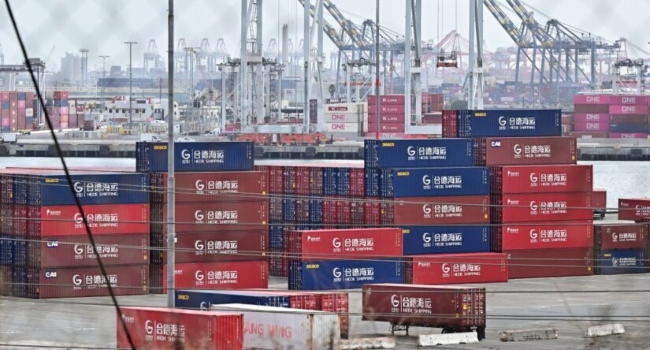
Nigeria has been impacted by a new wave of US tariffs that took effect on Friday, targeting 60 trading partners and replacing an expiring global duty previously enacted by President Donald Trump.
These new tariffs, ranging from 10 to 12.5 percent, affect major economies such as China, India, and the European Union, and have led to protests from Beijing and other countries.
US Trade Representative Jamieson Greer stated, The United States has had a forced labour import ban for nearly a century and rigorously enforces it; it’s well past time for our trading partners to do the same. Greer also emphasized that the targeted economies account for the majority of US trade.
The Trump administration acted quickly to restore the president’s tariff regime after the Supreme Court overturned several of his duties in February, limiting his authority to impose steep tariffs at will.
Following this setback, Trump used alternative legal authorities to reimpose a 10 percent tariff on imports, but the measure expired after 150 days, paving the way for the new set of duties initially proposed in June.
After months of investigation, these new measures have been designed to withstand legal challenges more effectively than previous efforts. Under the latest announcement, trading partners that have implemented or pledged to implement forced labour import bans, such as Canada, the EU, India, and the UK, face the lower 10 percent rate. Others, including China, Japan, and South Korea, are subject to the higher 12.5 percent tariff.
However, some relief was granted to the EU, Taiwan, Japan, South Korea, and Switzerland, owing to existing trade agreements with the US. The new levies were met with swift criticism, with Japan expressing regret and Australia’s trade minister calling the tariffs unjustified.
China’s foreign ministry reiterated its opposition to all forms of unilateral tariffs, warning that trade wars benefit no party. The EU welcomed the announcement as being consistent with its joint tariff commitments with the US.
Certain products, such as goods already subject to steel and aluminium tariffs, some energy products, fertilizers, and items covered under the US-Mexico-Canada trade agreement, will be exempt from the new duties.
Meanwhile, the US is conducting separate investigations into 16 economies over industrial overcapacity, which could result in further tariffs and country-specific rates. According to trade lawyer Greta Peisch, the administration’s strategy of maintaining a baseline tariff while holding the threat of further duties gives it leverage in negotiations and encourages compliance with trade agreements.
The approach is also aimed at making the tariffs more resilient to court challenges, suggesting they could remain throughout Trump’s term. The revival of tariffs is expected to increase government revenue and signals a shift towards a more protectionist stance for the world’s largest economy.
Former US trade official Ryan Majerus noted that the administration is seeking new ways to use tariffs aggressively, with Section 301 of the Trade Act of 1974 providing significant flexibility for adjustments.
Recent moves include a 25 percent tariff on certain Brazilian imports over alleged unfair trade practices and new 50 percent tariffs on Canadian goods in response to perceived discriminatory treatment of US products. These actions underscore the fragility of current tariff arrangements, as the administration continues to explore new legal avenues to expand its trade measures.
| S/N | Economy / Country | Section 301 Tariff Rate | Category / Mechanism |
|---|---|---|---|
| 1 | Argentina | 10% | Forced Labor Ban / ART Commitment |
| 2 | Bangladesh | 10% | Forced Labor Ban / ART Commitment |
| 3 | Cambodia | 10% | Forced Labor Ban / ART Commitment |
| 4 | Canada | 10% | Enforcement Framework / ART |
| 5 | Ecuador | 10% | Enforcement Framework / ART |
| 6 | El Salvador | 10% | Forced Labor Ban / ART Commitment |
| 7 | Guatemala | 10% | Forced Labor Ban / ART Commitment |
| 8 | Honduras | 10% | Forced Labor Ban / ART Commitment |
| 9 | India | 10% | Forced Labor Ban / ART Commitment |
| 10 | Indonesia | 10% | Enforcement Framework / ART |
| 11 | Jordan | 10% | Forced Labor Ban / ART Commitment |
| 12 | Malaysia | 10% | Forced Labor Ban / ART Commitment |
| 13 | Mexico | 10% | Enforcement Framework / ART |
| 14 | Pakistan | 10% | Enforcement Framework / ART |
| 15 | Sri Lanka | 10% | Forced Labor Ban / ART Commitment |
| 16 | Trinidad and Tobago | 10% | Forced Labor Ban / ART Commitment |
| 17 | United Kingdom | 10% | Forced Labor Ban / ART Commitment |
| 18 | European Union | 10% (Net of MFN) | Total duty capped at 10% (0% if MFN ≥ 10%) |
| 19 | Taiwan | 10% (Net of MFN) | Total duty capped at 10% (0% if MFN ≥ 10%) |
| 20 | Japan | 12.5% (Net of MFN) | Total duty capped at 12.5% (0% if MFN ≥ 12.5%) |
| 21 | South Korea | 12.5% (Net of MFN) | Total duty capped at 12.5% (0% if MFN ≥ 12.5%) |
| 22 | Switzerland | 12.5% (Net of MFN) | Total duty capped at 12.5% (0% if MFN ≥ 12.5%) |
| 23 | Algeria | 12.5% | Standard Rate |
| 24 | Angola | 12.5% | Standard Rate |
| 25 | Australia | 12.5% | Standard Rate |
| 26 | The Bahamas | 12.5% | Standard Rate |
| 27 | Bahrain | 12.5% | Standard Rate |
| 28 | Brazil | 12.5% | Standard Rate |
| 29 | Chile | 12.5% | Standard Rate |
| 30 | China (People’s Republic of) | 12.5% | Standard Rate |
| 31 | Colombia | 12.5% | Standard Rate |
| 32 | Costa Rica | 12.5% | Standard Rate |
| 33 | Dominican Republic | 12.5% | Standard Rate |
| 34 | Egypt | 12.5% | Standard Rate |
| 35 | Guyana | 12.5% | Standard Rate |
| 36 | Hong Kong, China | 12.5% | Standard Rate |
| 37 | Iraq | 12.5% | Standard Rate |
| 38 | Israel | 12.5% | Standard Rate |
| 39 | Kazakhstan | 12.5% | Standard Rate |
| 40 | Kuwait | 12.5% | Standard Rate |
| 41 | Libya | 12.5% | Standard Rate |
| 42 | Morocco | 12.5% | Standard Rate |
| 43 | New Zealand | 12.5% | Standard Rate |
| 44 | Nicaragua | 12.5% | Standard Rate |
| 45 | Nigeria | 12.5% | Standard Rate |
| 46 | Norway | 12.5% | Standard Rate |
| 47 | Oman | 12.5% | Standard Rate |
| 48 | Peru | 12.5% | Standard Rate |
| 49 | Philippines | 12.5% | Standard Rate |
| 50 | Qatar | 12.5% | Standard Rate |
| 51 | Russia | 12.5% | Standard Rate |
| 52 | Saudi Arabia | 12.5% | Standard Rate |
| 53 | Singapore | 12.5% | Standard Rate |
| 54 | South Africa | 12.5% | Standard Rate |
| 55 | Thailand | 12.5% | Standard Rate |
| 56 | Türkiye | 12.5% | Standard Rate |
| 57 | United Arab Emirates | 12.5% | Standard Rate |
| 58 | Uruguay | 12.5% | Standard Rate |
| 59 | Venezuela | 12.5% | Standard Rate |
| 60 | Vietnam | 12.5% | Standard Rate |
AFP