



The Nigerian Bar Association (NBA) has criticized the Economic and Financial Crimes Commission (EFCC) for freezing the Osun State Government’s bank account, arguing that the anti-graft agency lacks the constitutional authority to impose blanket restrictions on a state’s finances without due legal process.
On Wednesday, the EFCC directed that no withdrawals be made from Osun State’s statutory allocation account as part of an ongoing probe. In a letter dated August 5, 2026, and signed by Assistant Commander Adenike Babalola for the Director of Investigation, the Commission instructed First Bank to place a “post-no-debit” restriction on the account, pending the investigation’s conclusion. The affected account, referenced as “Osun State Government Statutory Allocation” (account number 2017170947), was formally addressed to the bank’s Managing Director and Chief Compliance Officer.
In a statement issued later that evening and signed by Head of Media and Publicity Dele Oyewale, the EFCC explained that the action was prompted by suspicious movements involving approximately N11 billion in Ecology Funds, Intervention Funds, and Federal Account Allocation Committee disbursements. The Commission noted it had been investigating the state since March 2026, with several officials, including the Accountant-General, already interviewed.
The EFCC insisted that its action was not politically motivated, despite the timing ahead of the August 15 governorship election, and stressed that it could not “fold its arms” in the face of alleged financial infractions.
Legal Experts and Civil Society React
NBA President, Afam Osigwe (SAN), warned that freezing a state government’s account could paralyze governance and represents an abuse of power. While acknowledging the EFCC’s right to seek court orders against specific, suspicious accounts, Osigwe maintained that the Commission cannot lawfully freeze all accounts belonging to a state without a valid court order.
He said, “No government agency or individual has the right to restrict withdrawals from state government accounts. Such blanket orders are unconstitutional and amount to an abuse of power.”
Other prominent legal voices echoed this view. Adeyinka Olumide-Fusika (SAN) emphasized that the EFCC must obtain judicial authorization before freezing accounts, citing consistent court rulings on the matter. Isiaka Olagunju (SAN) described the action as a serious infraction of the 1999 Constitution and an affront to federalism, while Professor Damilola Olawuyi (SAN) acknowledged the need for preventive measures but urged that such powers be exercised strictly within the law.
Wolemi Esan (SAN) clarified that under Section 7(6) of the Money Laundering (Prevention and Prohibition) Act, a temporary freeze of up to 72 hours is allowed without a court order, but any extension requires judicial approval.
Chief Mike Ahamba (SAN) stated he was unaware of any legal provision permitting the EFCC or Federal Government to freeze a state’s account, urging recourse to the courts for resolution.
Civil Society and Political Response
Civil society groups also weighed in. Auwal Musa Rafsanjani, Executive Director of the Civil Society Legislative Advocacy Centre, advised the Osun State Government to seek legal redress. Debo Adeniran, Chair of the Centre for Anti-Corruption and Open Leadership, argued the EFCC would be justified if it acted on evidence but warned against politically motivated actions. Ezenwa Nwagwu of the Peering Advocacy and Advancement Center in Africa cautioned against politicizing the issue, urging for facts to prevail over speculation.
Political Parties Divided
Opposition parties, including the African Democratic Congress (ADC), Labour Party (LP), Nigeria Democratic Congress (NDC), Social Democratic Party (SDP), and Young Progressives Party (YPP), condemned the EFCC’s action, accusing the Federal Government of using state institutions for political advantage ahead of the election. The ADC described the move as “political terrorism” and part of a broader strategy to undermine the Osun State Government, warning of the impact on essential public services.
The YPP labeled the freeze as an abuse of state institutions, raising concerns about its effect on democratic processes and public welfare. The NDC called the action “executive rascality,” while the SDP cautioned that the situation posed a threat to democracy and national stability. The Labour Party acknowledged the EFCC’s statutory powers but urged strict adherence to due process, especially so close to the election.
In contrast, the ruling All Progressives Congress (APC) defended the EFCC, emphasizing the agency’s mandate to investigate financial crimes and expressing confidence that the Commission acted within the law.
Osun Government Vows Legal Action
Osun State’s Attorney General and Commissioner for Justice, Oluwole Jimi-Bada, confirmed that the state would challenge the EFCC’s action in court, asserting that the agency cannot freeze government accounts without a court order. Commissioner for Finance, Sola Ogungbile, also condemned the move, highlighting potential harm to the state’s operations and residents’ welfare.
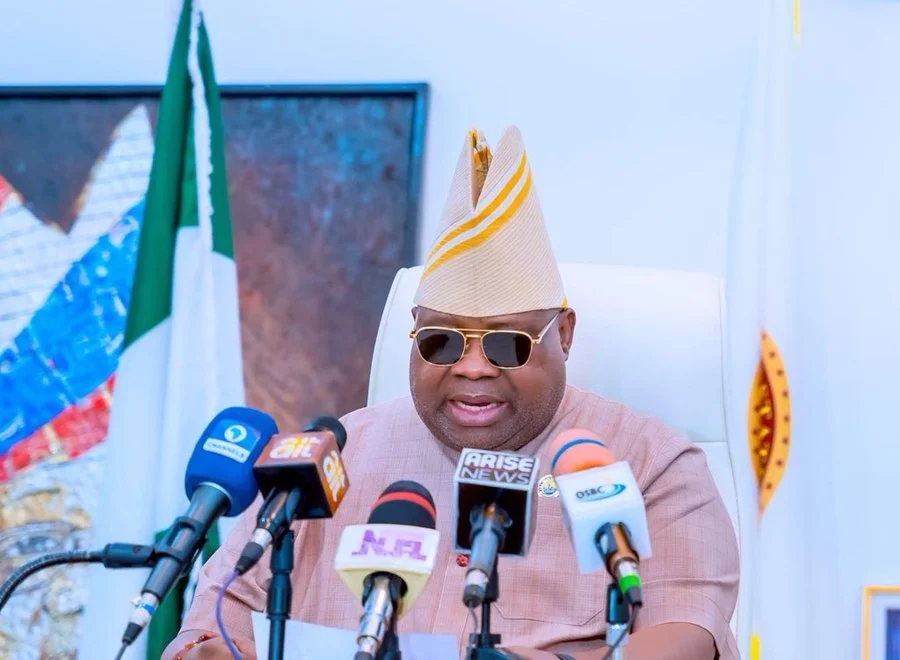
Governor Ademola Adeleke maintained that state funds were not being used for his re-election campaign and criticized the EFCC’s actions as disruptive.
Conclusion
The controversy over the freezing of Osun State’s accounts has sparked a national debate on the limits of anti-corruption powers, the sanctity of due process, and the protection of democratic institutions. While the EFCC insists its actions are lawful and non-partisan, legal experts, civil society, and opposition parties continue to challenge the legality, timing, and broader implications of the move.
Punchng Report.