



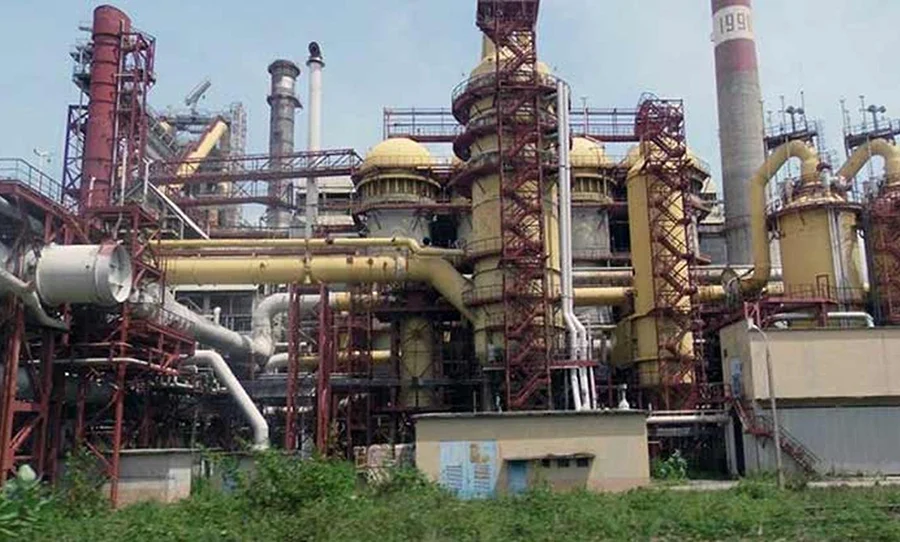
Between 2020 and 2025, the Federal Government spent approximately N7.21bn on the operations of Ajaokuta Steel Company Limited, even as the nearly 50-year-old Kogi State complex remained largely inactive.
According to spending records from GovSpend, reviewed by us, this expenditure covered 501 transactions, including taxes, statutory payments, pension and housing fund contributions, maintenance, roadworks, and other infrastructure-related outlays.
GovSpend, a platform that tracks Federal Government spending, revealed that these costs persisted despite Nigeria’s ongoing dependence on imported steel. Data from the National Bureau of Statistics (NBS) showed that iron and steel imports surpassed $1tn in 2025, with annual average imports of about N526bn over the last six years. These figures represent recorded trade and exclude potential unreported imports.
Established in 1979 with Soviet assistance, Ajaokuta was intended to anchor Nigeria’s industrialisation by producing up to five million tonnes of steel annually from domestic iron ore reserves. However, the spending records highlight that the company continued to incur significant costs over six years, despite its failure to achieve large-scale production.
Annual expenditures fluctuated: N795.4m was spent across 57 transactions in 2020; N1.19bn in 2021 from 119 transactions; N1.01bn in 2022; N1.36bn in 2023; peaking at N1.66bn in 2024 across 107 transactions; and declining to N1.20bn in 2025. The data indicates sustained, recurring costs rather than one-off interventions.
Routine payments included taxes, VAT, pension, and National Housing Fund contributions. Other disbursements were channelled to maintenance and infrastructure projects, such as road rehabilitation and the installation of solar streetlights. Notably, some payments funded infrastructure work in Lagos—including projects in Obalende, Okofaji, Olowogbowo, Isale Eko, and the rehabilitation of a 250-metre access road in Idoluwo Street, Lagos Island—raising questions about the scope of Ajaokuta’s responsibilities given its Kogi State location. The rationale and authorisations behind these expenditures may require further scrutiny of contracts and procurement records.
These ongoing costs come as government efforts to revive the steel plant have intensified. The Ajaokuta Presidential Project and Implementation Team was established in May 2020 to accelerate the plant’s revival, coordinate workplans, and facilitate possible concession or partnerships. In July 2026, Ajaokuta Steel Company signed a 20-year gas supply agreement with the Nigerian National Petroleum Company Limited, alongside the Gas Aggregation Company of Nigeria and NNPC Exploration and Production Limited. The agreement provides for three million standard cubic feet per day of firm gas, and up to 47 million standard cubic feet per day of interruptible gas, to support both power generation and the plant’s revival.
Managing Director Nasir Naeem Abdulsalam, appointed in April 2025, emphasised that reliable gas supply is essential for steel production and independent power generation at the complex—a concern repeatedly raised by potential investors. Despite these developments, only limited production is taking place, with engineers operating a modular blast furnace to manufacture manhole covers, utility poles, and rail-track components for a small domestic market. This modest output stands in stark contrast to the complex’s original design capacity.
The renewed focus on Ajaokuta comes as President Bola Tinubu’s administration pushes to grow domestic manufacturing, targeting 10 million tonnes of annual crude-steel production by 2030. Nevertheless, Nigeria continues to spend vast sums on steel imports—estimated at about $4bn, or N5.6tn, annually according to Minister of Steel Development Abubakar Audu—despite having a major steel complex built to support local production.
Punchng Report.