



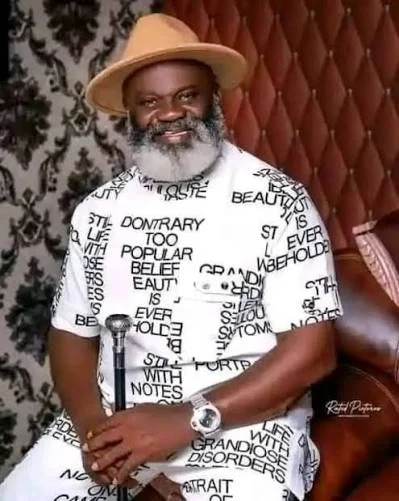
Veteran actor and singer Harry Anyanwu, popularly known as Harry B, speaks with Naomi Chima about his acting and music careers, staying relevant and his desire to collaborate with younger artistes.
How was your childhood?
My childhood was different. I come from a family of nine children—seven boys and two girls—and I am the fourth child. I was always asking for one thing or another, which sometimes caused friction between my parents and me, especially my father, who was a strict disciplinarian.
Whenever he was at home, we were not allowed to play outside. If you disobeyed him, you could end up sleeping outside. I never raised my own children that way; I made sure they had what they needed.
Were there signs that you would eventually become an entertainer?
I was an extrovert. I loved being outdoors, playing, meeting people and making friends. Music also caught my attention at a young age, but I never thought of it as a commercial venture.
Back then, our focus was on academics. We did not talk much about music, football or anything outside schoolwork. My parents were particular about academic excellence. That was not a bad thing, but they probably did not realise that entertainment—including music, acting and writing—would become what it is today. These days, parents take their children for acting and music lessons, but times have changed.
Tell us about your educational background. Did your field of study align with what you do today?
When I was younger, everything was about going to school. After graduating from secondary school, I wanted to travel abroad for further studies, like my friends, but my father did not want me to leave Nigeria. So, I started working in a bank. I worked there for a year before leaving Nigeria for the United States.
I enrolled in summer school and began earning credit hours. But because I was sponsoring myself, it was difficult to continue. I later moved to Connecticut, where I attended the University of Bridgeport and studied accounting.
How did you get into the movie industry?
When I returned to Nigeria, many people approached me and said I had what it took to act. But acting was not initially what I planned to do for a living. I had worked in a bank and studied accounting, and I thought I would return to that profession. My entry into Nollywood was more or less an accident. My journey began around 2010, and I officially joined the industry in 2012.
How has the journey been, particularly as someone who did not study theatre arts?
There have been a few challenges because I did not study theatre arts. But people forget that everybody is an actor in one way or another. Life itself involves acting. The way we behave with our families and friends is a kind of acting. When you bring in a camera, though, that is when you distinguish professionals from non-professionals.
When I joined Nollywood, I saw it as a lifestyle. I did not approach it as something I could not do, because I was born to entertain. I am an extrovert, and I have never been shy or experienced stage fright.
You are often cast as a king or traditional ruler. Have you ever wished filmmakers would give you different roles?
It was not about wishing. At some point, I had to ask filmmakers to stop giving me those roles. I started reading scripts and choosing different characters so I would not be stereotyped. I am not a one-dimensional actor; I can play different characters. I moved away from those roles and took on wicked elders and antagonists to avoid being typecast.
What was your first breakthrough in Nollywood?
I would not say one particular movie marked my breakthrough. When I joined the industry, I was given a major role in my first movie, even though I knew very little about acting. I played a man who sold rat poison. I had never acted in a movie before, but I was given the role and delivered. After that, filmmakers noticed my appearance and started giving me lead roles.
Nollywood has changed considerably since you started acting. Which period do you miss most, and what do you think the industry has lost?
I miss the old era, particularly the period of Genevieve, K.O.K. and films such as Living in Bondage. We no longer tell enough unique stories. That is the problem.
Some of the stories produced today are copies of existing ones. Writers take one or two stories, change the characters and present them as new productions. When I read some scripts, I recognise stories I have seen repeatedly. That does not mean I am talking down on Nollywood. We still have people writing good stories and producing good films.
Have any of your colleagues’ acting skills intimidated you?
I enjoy the acting skills of every colleague I work with, but I would not say anyone has intimidated me. I am not someone who gets intimidated or suffers from complexes. I do not experience stage fright. I have been this way all my life. I am an extrovert to a fault.
Do you believe actors are adequately rewarded for their work?
I do not think so, especially for those who are just starting out. I know what I went through when I began. I was not paid for almost all the jobs I did, but I kept going. I think it was divinely ordained that I would be in the industry. Otherwise, I would have quit, because I was financially comfortable. Passion kept me in the game. I did not enter the industry to make money.
Do you think older actors are being pushed aside by the younger generation?
There is no such thing as older actors being pushed aside. Everybody has a role to play in the industry. If you are an elder, you play an elderly role. You may also be able to take a lead role in certain storylines. There is no such thing as being pushed aside.
Any story you write in Nollywood must have an elderly character. The younger generation cannot play young characters and also play the elderly. Everyone is important.
It is a transformation: you start as a young person and, before you know it, you become an elder yourself. That does not mean you will be pushed aside, because you can still be relevant. But it is up to you to show that relevance through your work.
When I came into the industry, I did not come just to wear a red cap and play an elder. No. I wanted lead roles. Give me the lead role.
Where did your love for music come from?
My love for music was there before I even thought of becoming an actor. I would say it came from my father, who played musical instruments when I was young. Besides that, I have the voice and the vibes.
You have also ventured into music. Do you feel pressured to compete with younger artistes such as Davido and Burna Boy?
I do not see their success as a source of pressure; it inspires me. I am the one living my life, and people should not let negative comments discourage them or stop them from pursuing their goals.
When I decided to join Nollywood, some of my friends made negative comments, but I knew what I wanted. I took my journey one step at a time. I also believe in doing original things. I do not try to sound like anyone else; I want my music to reflect who I am. So, there is no pressure at all. Besides, age is just a number.
How do you handle the challenge of being taken seriously as a musician when many people primarily know you as an actor?
I am the one who schedules my time, so others can do their thing while I do mine. I love music, and I am taking it seriously now. If some people do not take me seriously, that is not a challenge. I will get there. I encourage myself; there is never a dull moment.
Between acting and music, which gives you greater satisfaction?
It depends on the production. Some acting jobs are enjoyable, while others are not. You have to take them as they come. But when it comes to music, every performance I attend is fun.
What inspires your songs?
If you listen to most of my songs, you will find strong messages about who I am, my character, how I feel about life and how I see society. I talk about reality and everyday people.
Do you write your lyrics, and have you considered collaborating with younger musicians?
I write my lyrics, and I also have someone who writes for me, so it is more of a collaboration. I try to blend my character into my songs.
Some people believe that, at a certain age, you should behave like an elder. That is why I am different. I do not want to act as though I am old. I am not saying I am young, but my disposition reflects that of a young person.
Do you have plans to collaborate with Davido, Flavour and other big-name artistes?
Why not? Collaborating with Flavour would be my biggest break. I have been praying for it.
The music industry is competitive, with younger artistes introducing new sounds and dance trends. How do you keep up?
I explore and enjoy different genres of music. I do not limit myself to one style, and I do not think there should be barriers to what an artiste can do. Music should not be limited to Afrobeats or hip-hop. You can blend different styles.
I do hip-hop, Christian and cultural music. I try to explore different aspects of music.
How did your family react when you decided to pursue music at this stage of your life?
They had no choice but to celebrate me and be happy for me. It gives them joy to see me doing this.
At this stage of your life, is there still a role, song or entertainment achievement you hope to accomplish?
I just want to take my music to the next level and reach more people. I know my strength in Nollywood has given me a soft landing. That is why people reach out to me and help promote the things they love.
I just want to keep pushing. Hopefully, one day, one of my songs will take off and people will start shouting about it. But I cannot give up. I am not giving up, and I hope to keep doing this until I am much older. I also think about those coming behind me.
Your dressing often gives you a youthful appearance. Is this part of the entertainment personality you have created?
Even before joining Nollywood or the entertainment industry, I loved dressing well. I have always had my own style. The way you see me today is how I have always been. It is not something I started doing after joining the industry.
Are you as adventurous at home as you are in the entertainment industry, or is your personality different away from the cameras?
I am the same everywhere, even at home. I play with my children a lot.
What does a typical day look like when you are not filming or performing?
There is hardly a day when I am not filming or performing. I also spend time with people, shoot and go to the studio. I do not waste time. Even recently, when I was not filming, I was in the studio working on something new.
How do you balance your busy schedule and relieve stress?
I manage my time. Everybody should learn how to manage their time and life. You do not have to pay to rest, sleep or eat. As you get older, you become wiser about the things that can improve your life.
Has being in the entertainment industry affected your family and relationships?
I have never had any family problems. I feel the same way about my relationships. As I said, I manage my life through proper time management.
Do any of your children act or sing, or are you the only one in the entertainment industry?
My children are fantastic. I tried taking some of them to movie locations when they were much younger, but they did not want to go. They enjoy this aspect of life, though, and play some musical instruments. But they are not in the industry.
What kind of food do you love to eat?
When I was much younger, I loved eating rice, but now I rarely eat it. I like nibbling on different kinds of food. But when it comes to swallowing, I love all kinds of food. That is my favourite.
Have you ever been misjudged because of a movie character you played?
Of course, many times. Some fans become attached to a particular character, especially when they love the way you portray that character in a film. When they see you in person, they may even be ready to shoot you. They are often emotional because of how realistically we portray things. You need to understand why they become fans.
What is the biggest lesson the entertainment industry has taught you?
You learn many lessons. No one is perfect, and to me, they are all lessons. For instance, you learn about trust. You may find it hard to believe how some people you trust treat you once you enter the industry. It is never the same again. You learn those things and then find ways to improve as you go along.
One thing I have learnt is to support other people to the best of my ability. I can offer people I know all kinds of support, including collaborating with emerging talent. But you seldom get that in the industry. The music industry is wasteful. Still, I am not complaining. I am loving every step of my journey.
Have you ever felt the need to slow down because of your busy schedule in music and acting?
Never. I have so much energy. Why would I slow down? I am not a negative person, and I do not entertain negative thoughts. I am all about positivity. If I can make it, I will go back, pick up my pace and keep pushing.
Your accent often gets people’s attention. Is it part of your style or simply who you are?
This is just who I am now, but many people do not know that I can switch my phonetics. I can change it wherever I want, depending on my mood, the setting or what I want to say.