



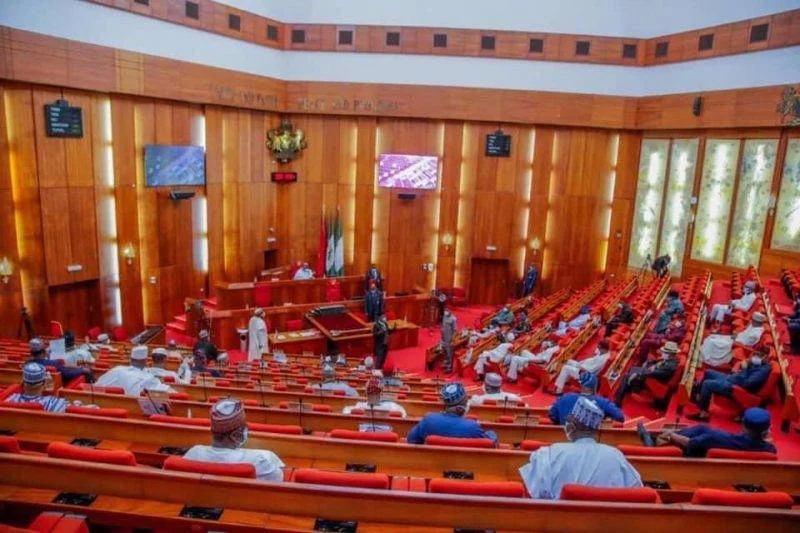
The Senate has clarified that the controversial provision prescribing penalties for preaching, hawking, and trading inside commercial vehicles is not a new attempt to ban religious activities or street evangelism.
Instead, it is a long-standing provision of the Federal Road Safety Commission (FRSC) Act, which has been in force since 2007.
This clarification follows widespread public outcry over the Federal Road Safety Corps (Amendment) Bill, 2026, which proposes a N50,000 fine for anyone convicted of hawking, trading, or preaching inside commercial vehicles.
The new bill, aimed at strengthening road safety enforcement and reducing road accidents, drew criticism from Christian organizations, opposition parties, civil society groups, and the general public. Many argued that the provision was insensitive, especially given rising unemployment and economic hardship.
Senate Leader Opeyemi Bamidele, in a statement issued Monday, emphasized that the contentious provision had been misrepresented. He insisted that the amendment neither introduces a new offence nor seeks to ban preaching in public places. Bamidele stated, “The Senate is aware of public concerns regarding the alleged prohibition of preaching and hawking in commercial vehicles under the ongoing amendment to the Federal Road Safety Commission (Establishment) Act, No. 22, 2007. According to Section 10(4) of the Act and Regulation 220 of the National Road Traffic Regulations (NRTR) 2012, preaching and hawking in commercial vehicles have been offences since 2007. These are not new provisions in our legal system. The only change is that the provision, previously listed as Item 36 in the Second Schedule of the Act, is now listed as Item 49.”
The Senate stressed that the legislation is focused on promoting road safety and protecting commuters from distractions that could endanger lives. The bill does not outlaw street preaching, as some have claimed, but seeks to ensure the safety of commuters and road users. It is not intended to undermine religious activities in public spaces.
The Senate also dismissed claims linking the amendment to Bamidele, clarifying that the bill originated from the House of Representatives. “The Bill is not an initiative of the Senate Leader, Senator Opeyemi Bamidele. It is a concurrence bill first amended by the House of Representatives. As required by the 1999 Constitution, the Bill needs the Senate’s concurrence before it can become law. The amendment process is ongoing, and stakeholders are encouraged to voice their concerns to the appropriate institutions before the process is completed,” Bamidele added.
The clarification came days after the Senate passed the Federal Road Safety Corps (Amendment) Bill, 2026, which seeks to strengthen road safety enforcement with tougher penalties for traffic offences. In addition to the N50,000 fine for hawking, trading, or preaching inside commercial vehicles, the bill proposes a N50,000 fine, six months’ imprisonment, or both for motorists who refuse to cooperate with FRSC officials conducting roadside breath tests. The penalty for driving under the influence of alcohol or drugs would increase from N5,000 to N100,000, with offenders facing up to two years in prison or both. Penalties for disobeying traffic lights, road signs, and other traffic controls would also rise to N100,000, and violations such as speeding and reckless driving would attract stiffer fines and possible jail terms.
The revised schedule now contains 52 traffic violations and their respective penalties. Lawmakers say these amendments are meant to improve compliance with traffic regulations, bolster the FRSC’s enforcement powers, and enhance road safety nationwide.
Before the Senate’s clarification, opposition parties had criticized the proposed penalties, arguing that criminalizing hawking and preaching in commercial vehicles was inappropriate, especially as many Nigerians face inflation, unemployment, and declining purchasing power. In interviews with The PUNCH, party officials described the proposal as insensitive and urged the National Assembly to prioritize economic reforms over imposing harsher penalties on vulnerable citizens.