



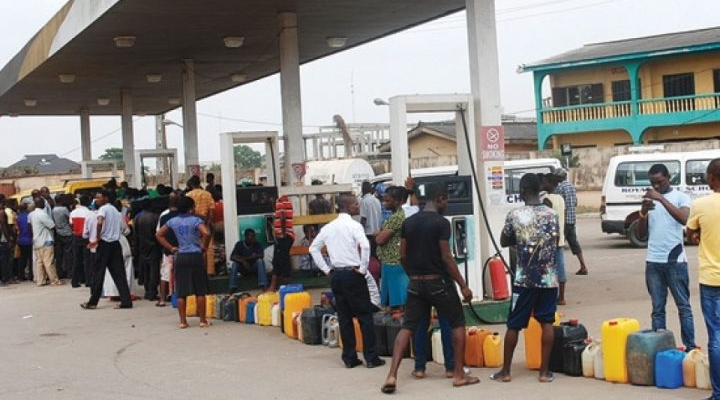
The pump price of Premium Motor Spirit (PMS), popularly known as petrol, has continued to spike nationwide, with reports of prices reaching as high as N1,500 per litre in Kano, Yobe, Sokoto, Borno, Taraba, and Zamfara states. Similar increases have been recorded in other regions, deepening economic hardship for many Nigerians.
This price surge prompted the Nigeria Labour Congress (NLC) to call on the Federal Government for urgent interventions, including reasonable wage increases for workers and the sale of crude oil to local refineries in naira. In a statement signed by its President, Joe Ajaero, the NLC noted that petrol now averages N1,430 per litre in major cities, with even higher prices in remote areas. The union warned that escalating petrol costs will further drive up transportation fares, and consequently, the prices of food, housing, education, and other essentials.
Fuel marketers have echoed the NLC’s concerns, cautioning that petrol could reach N2,000 per litre if global crude oil prices keep rising. They also urged the government to address the growing market dominance of Dangote Petroleum Refinery.
Regional Price Breakdown
- Yobe State: Petrol is selling for between N1,500 and N1,520 per litre in Damaturu, the state capital. Residents describe the situation as unprecedented and increasingly unaffordable.
- Kano State: Prices range from N1,460 to N1,500 per litre. The hike has forced some vehicle owners to abandon their cars, while tricycle operators (“yan’ adaidaita sahu”) have raised fares by about 50%.
- Sokoto State: Petrol now costs between N1,465 and N1,500 per litre, up from N1,365 recently.
- Borno State: Petrol is selling for N1,500 per litre in Maiduguri.
- Taraba State: Prices have risen to between N1,500 and N1,700 per litre, impacting the cost of moving goods and people.
- Zamfara State: In Gusau, motorists pay between N1,450 and N1,500 per litre, up from N1,350 previously.
Similar hikes have been reported in Kaduna (up to N1,450 per litre), Benue (N1,430–N1,470), Kogi (N1,400–N1,450), Plateau (N1,450–N1,470), Bauchi (N1,460–N1,470), Adamawa (N1,400–N1,850), Rivers (N1,385–N1,400), Abia (N1,350–N1,440), Delta (N1,350–N1,410), Bayelsa (N1,400), Ekiti (N1,380–N1,450), Edo (N1,395–N1,425), and Kwara (N1,379–N1,405).
Many motorists and commuters have been forced to alter their routines, with some leaving their vehicles at home due to the high cost of petrol.
NLC’s Demands and Concerns
The NLC, in its statement titled “Save the Situation Now,” linked the latest surge in fuel prices to rising international crude costs and conflict in the Gulf region. The union argued that, as an oil-producing country, Nigeria should be able to shield its citizens from global market shocks. Among its demands, the NLC called for:
- Immediate wage awards to workers
- Sale of crude oil to local refineries in naira
- Expansion of national petroleum storage to enhance energy security
- Consideration of temporary subsidies or interventions in emergency situations
The NLC pointed out that the government has benefited from higher crude prices, which are currently above the budget benchmark, and argued for using this windfall to support Nigerians and ease inflationary pressures. The union also expressed concern over local refineries importing crude, stressing the need to develop domestic refining capacity.
Marketers’ Perspectives
Fuel marketers joined the NLC in urging government intervention. They warned that if international crude prices and the exchange rate continue to climb, petrol could soon sell for N2,000 per litre. The Independent Petroleum Marketers Association of Nigeria (IPMAN) suggested that the government supply crude to domestic refineries at a price slightly below international market rates and review statutory charges on fuel distribution to help stabilize prices.
IPMAN’s spokesperson, Chinedu Ukadike, called for:
- Reduced taxes and shipping fees on petroleum products
- Sufficient crude oil supply to domestic refineries to cover 60–90 days of production
- Establishment of a crude pricing system for local refineries, locked in for several months to buffer against global volatility
Ukadike argued that such measures would help protect consumers from constant price hikes and reduce the impact of both rising crude prices and naira devaluation.
Dangote Refinery and Market Concerns
The Dangote Refinery’s recent price increases have drawn criticism, with its petrol gantry price rising from N1,265 to N1,350 per litre in mid-September—an N85 (6.7%) jump. Since August, Dangote has raised prices four times, up by N185 per litre (about 16%) in three weeks.
Stakeholders, including the NLC, warn that Dangote’s growing influence could lead to a quasi-monopoly, especially as state-owned refineries remain largely inoperative. The NLC called for the rehabilitation of public refineries to foster competition and protect consumers, accusing the government of enabling Dangote’s dominance by neglecting public assets.
Wider Economic Impact
Since the removal of petrol subsidies in May 2023, Nigeria’s fuel market has been exposed to international price fluctuations, exchange rate swings, and supply chain costs. While the government has sought to boost local refining and reduce import dependence, the persistent volatility in global oil prices and foreign exchange rates continues to squeeze household incomes and fuel inflation.
The NLC and marketers insist that the Federal Government must act swiftly to ease the burden on Nigerians—whether through temporary subsidies, targeted interventions, or structural reforms in the downstream petroleum sector.