



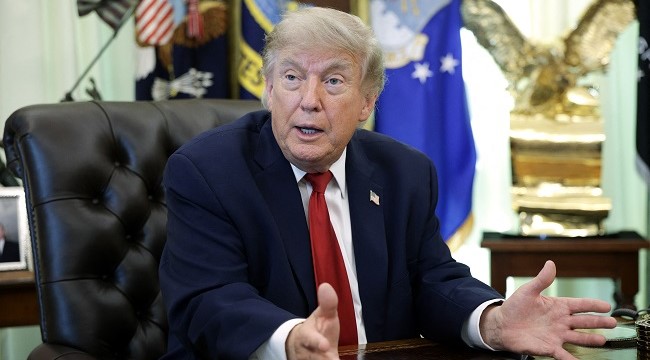
The US Supreme Court on Tuesday rejected President Donald Trump’s unprecedented attempt to limit birthright citizenship. In a closely watched 6-3 decision delivered on the final day of its term, the Court upheld the longstanding principle that nearly everyone born on US soil is entitled to American citizenship.
Last year, Trump issued an executive order on the first day of his second term seeking to deny automatic citizenship to children born in the United States to parents who are in the country illegally or on temporary visas. Lower courts blocked the order, citing the Citizenship Clause of the 14th Amendment, which guarantees citizenship to almost anyone born in the US.
The Supreme Court affirmed these rulings, with Chief Justice John Roberts writing for the majority: Children born in the United States to parents unlawfully or temporarily present are ‘subject to the jurisdiction’ of the United States and are citizens at birth under the Fourteenth Amendment’s Citizenship Clause.
In a highly unusual move, Trump personally attended the Supreme Court’s oral arguments on birthright citizenship in April, staying for the presentation by his solicitor general, John Sauer. He left before American Civil Liberties Union attorney Cecillia Wang, who defended birthright citizenship, presented her arguments.
Trump’s push to end birthright citizenship was a central part of his broader immigration agenda, which has also included efforts to expel millions of undocumented migrants.
During oral arguments, Solicitor General Sauer argued that unrestricted birthright citizenship incentivizes illegal immigration and so-called birth tourism, where foreigners travel to the US specifically to give birth.
The 14th Amendment, however, states, “All persons born or naturalized in the United States, and subject to the jurisdiction thereof, are citizens of the United States. Exceptions have historically applied only to those not subject to US jurisdiction, such as the children of foreign diplomats.
The Trump administration contended that the 14th Amendment was intended only to address the citizenship of former slaves, not the children of undocumented immigrants or temporary visitors.
Trump’s executive order was based on the claim that individuals in the US illegally or on visas are not subject to the jurisdiction” of the country and thus are excluded from automatic citizenship.
The Supreme Court rejected this interpretation, citing the landmark 1898 case of Wong Kim Ark, in which the Court ruled that a man born in San Francisco to Chinese immigrant parents was a US citizen by birthright, despite his parents’ status.
This decision marks the third major defeat for President Trump at the Supreme Court this term. Earlier, the justices struck down most of his global tariffs and blocked his attempt to dismiss Federal Reserve governor Lisa Cook.
— AFP