



Israel carried out a new round of airstrikes against Iran on Monday, prompting Tehran to warn of retaliatory attacks on critical infrastructure throughout the Middle East. The ongoing conflict has triggered the world’s most severe energy crisis in decades.
Explosions were reported in Tehran, according to Iranian media, while Saudi Arabia and the United Arab Emirates confirmed intercepting incoming missiles and drones.
International Energy Agency chief Fatih Birol stated that at least 40 energy facilities across the oil- and gas-rich region have been significantly damaged since the conflict began, which he described as being sparked by Israeli and US strikes on Iran four weeks ago.
In retaliation, Iran has launched missiles and drones at Israel and across the Gulf, targeting both energy infrastructure and US diplomatic sites. Iran has also disrupted shipping traffic through the Strait of Hormuz—a crucial passageway for one-fifth of the world’s oil supply.
With oil prices remaining above $100 per barrel amid escalating supply fears, US President Donald Trump issued an ultimatum, threatening to destroy Iranian power plants unless Tehran reopened the strait within 48 hours. The deadline, based on his social media post, falls at 23:44 GMT, early Tuesday morning in Iran.
Iran responded defiantly, with parliamentary speaker Mohammad Bagher Ghalibaf declaring that any attack on Iranian infrastructure would result in irreversible destruction of key facilities across the region.
Birol highlighted the gravity of the situation, noting that the world is currently losing 11 million barrels of oil per day—more than during the two major oil crises of the 1970s. He warned, “No country will be immune to the effects of this crisis if it continues,” and called for coordinated international action.
As tensions rose, Asian stock markets dipped and oil prices climbed, with US benchmark crude briefly surpassing $100 per barrel. Iran allowed a limited number of ships from friendly nations to transit the Strait of Hormuz, while warning it would block vessels from countries it accuses of aggression. The Iranian parliament is considering imposing a toll on passage through the strait, with Ghalibaf stating that maritime traffic would not return to pre-war norms.
President Trump has offered varying timelines for the conflict, saying on Friday he was considering winding down operations, only to threaten a major escalation against Iran’s power grid a day later.
Meanwhile, Israeli Prime Minister Benjamin Netanyahu announced a prolonged campaign against Iran, a state sponsor of Hamas, the group responsible for the October 7, 2023, attack on Israel. Israel has also intensified operations against Hezbollah in Lebanon, warning of a drawn-out engagement.
Israeli military spokesperson Brigadier General Effie Defrin told citizens to prepare for more weeks of conflict with Iran and Hezbollah. Israeli forces have targeted bridges used by Hezbollah to cross the Litani River, deep inside Lebanon.
More than 1,000 people have died in Lebanon since the start of Israeli strikes, with over one million displaced, according to the Lebanese health ministry. President Joseph Aoun condemned the destruction of bridges as a dangerous escalation and violation of sovereignty, while Prime Minister Nawaf Salam held Hezbollah partly responsible for initiating attacks following the assassination of Iran’s supreme leader, Ali Khamenei, at the war’s outset.
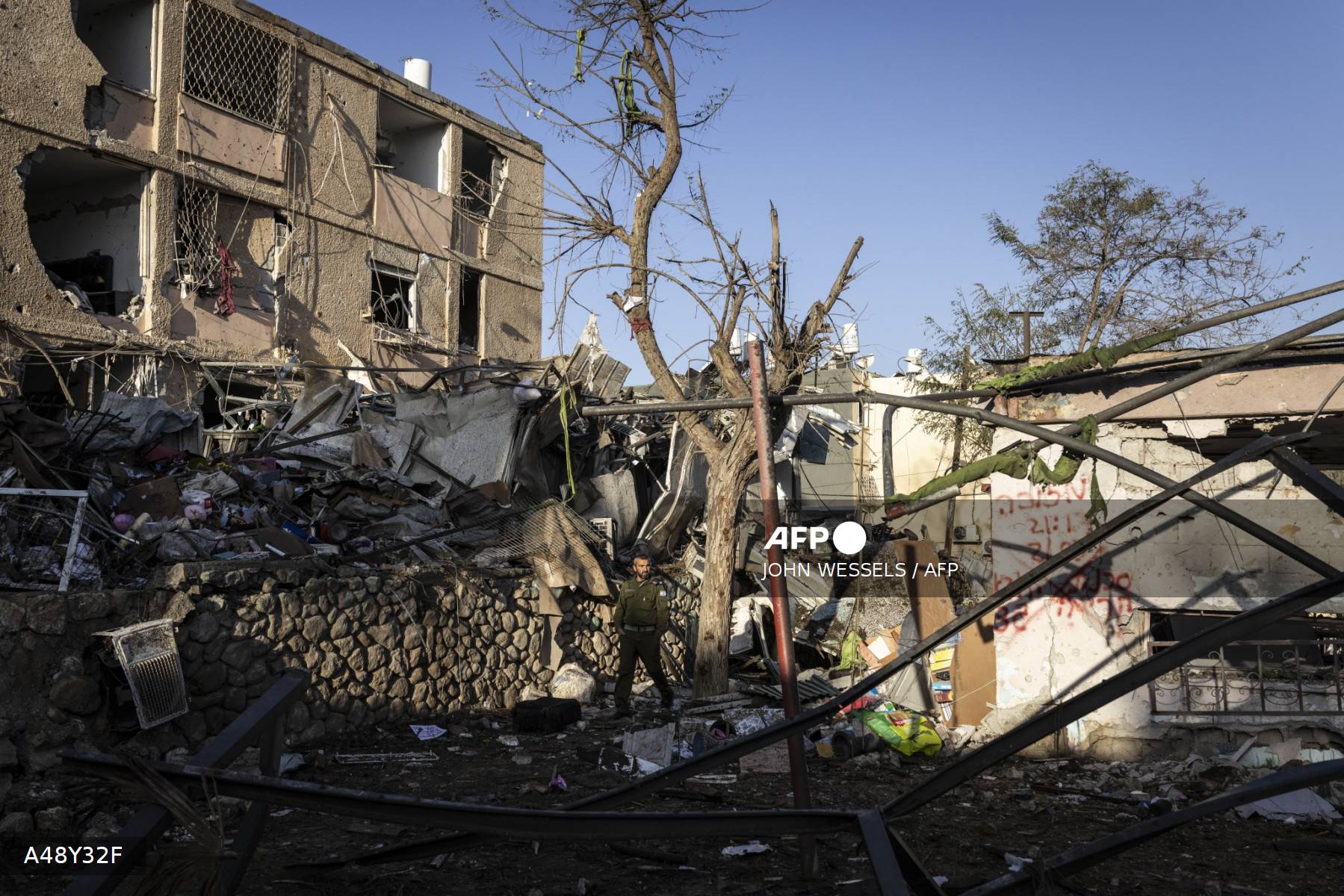
Despite Israel’s advanced air defenses, Iranian missiles struck two southern Israeli towns over the weekend, including Dimona near the country’s nuclear facility, injuring dozens. Prime Minister Netanyahu, visiting the damaged town of Arad, pledged to pursue senior Iranian Revolutionary Guards commanders.
A missile reportedly landed five kilometers from Israel’s nuclear facility, which Israel maintains is for research purposes, though it is widely believed to house the Middle East’s only nuclear arsenal. Iran said its strike on Dimona was in response to a previous attack on its nuclear site in Natanz; Israel’s military said it was unaware of such a strike.
In Iran, the US-based Human Rights Activists News Agency estimates at least 3,230 deaths, including 1,406 civilians, since the war began. These figures could not be independently verified by AFP.