



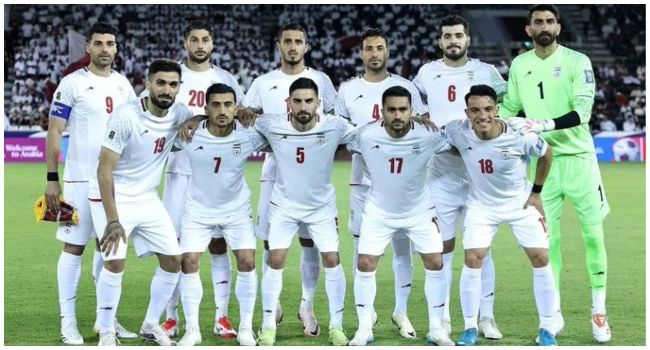
Iran’s national football team is set to arrive in Mexico early Sunday for the 2026 World Cup, amid a tense diplomatic standoff between Tehran and Washington.
The dispute escalated after the United States refused to grant visas to several members of the Iranian team’s support staff, casting a shadow over the tournament’s opening days.
The controversy erupted just days before the World Cup kicks off on Thursday. The 2026 tournament is being co-hosted by the United States, Mexico, and Canada. Iranian state television reported that the team left Turkey, where they held a training camp in Antalya, on Saturday, and are expected to land in Tijuana, northwest Mexico, early Sunday. Tijuana will serve as their base for the duration of the tournament, after the team switched from their original site in Tucson, Arizona in late May.
Iran is set to play all three of its group stage matches on U.S. soil, marking the first time a host nation will receive the team of a country it is at war with. The Iranian squad spent nearly three weeks in Turkey, using the time to apply for visas to Mexico, Canada, and the United States. According to U.S. envoy to Turkey Tom Barrack, the players received their U.S. visas on the eve of their departure for Mexico. However, Iran’s embassy in Turkey issued a strong protest, saying that 15 administrative and management staff had been denied entry.
“In escalating this deliberate and discriminatory treatment against Iran’s national football team, you have reached the highest level,” the embassy wrote on X, calling on FIFA to hold the United States accountable for violating its rules.
Further complicating the situation, Iran’s ambassador to Mexico said the team was informed that, under their visa terms, they must arrive and depart U.S. soil on the same day as each match. This contradicts earlier statements by team spokesman Amir Mahdi Alavi, who said the visas were multiple-entry and would allow the team to arrive a day or two before matches as per FIFA regulations, which require pre-match press conferences at the venue.
The Iranian Football Federation, which claimed its president Mehdi Taj was among those denied a visa, condemned the move as “political interference in sport in its worst form.” In response, a U.S. administration official stated that the necessary visas for the players and essential staff had been issued, but warned that the U.S. “will not allow the Iranian team to abuse this system to sneak terrorists into the United States under false pretenses.”
U.S. officials have previously expressed concerns about non-athlete members of the Iranian delegation, citing possible links to the Revolutionary Guards, which is on the U.S. terror blacklist. Iranian media abroad have reported that federation chief Mehdi Taj is a former Guards member.
The visa issue also affected Iraq’s national team. U.S. Customs and Border Protection reported that after arriving in Chicago on Friday, two Iraqi team members were subjected to additional screening. One, a photographer, was denied entry.
The regional tensions have been exacerbated by recent conflict, with fighting between the United States, Israel, and Iran erupting in late February, followed by a fragile ceasefire in April that has recently come under strain.
Iran is in Group G and will face New Zealand and Belgium in Los Angeles on June 15 and 21, and Egypt in Seattle on June 26.