



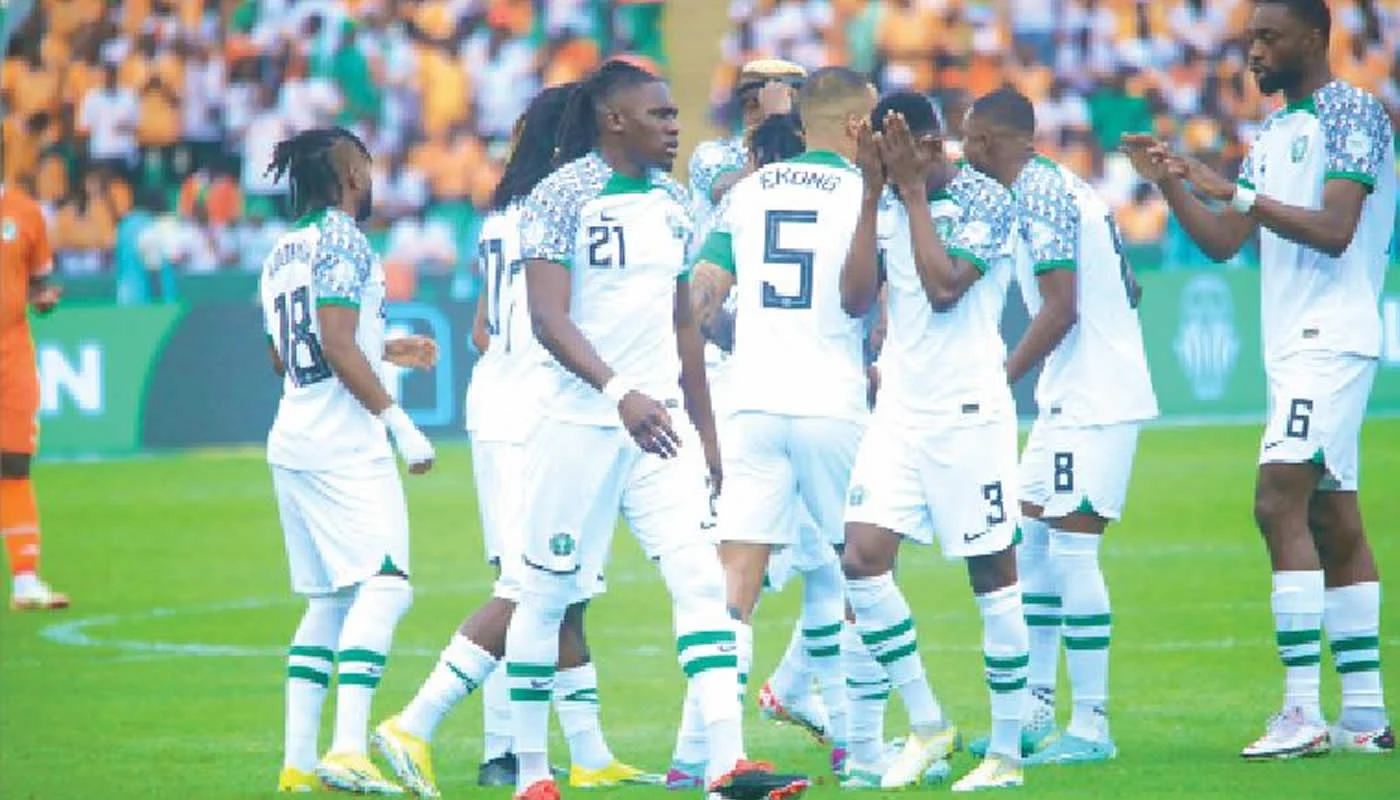
Nigeria’s failure to qualify for a second consecutive FIFA World Cup has heightened demands for leadership change at the Nigeria Football Federation (NFF).
Football stakeholders are urging the current board to take responsibility and step aside as pressure builds ahead of the federation’s next electoral cycle, according to PUNCH Sports Extra.
Abiodun Obafemi, a former Nigeria international and 1996 Olympic gold medallist, told PUNCH Sports Extra that he supports any action that could restore order to Nigerian football, stressing that the country cannot persist with the status quo and expect improvement.
“Honestly, I agree with any action that will bring positive change—even if it means a complete overhaul. We just need a change. We cannot keep doing the same thing and expect different results,” Obafemi said.
We missed the last World Cup, and considering the calibre of players we have, Nigeria should have been there. Even if only two African teams qualify, Nigeria should be one of them. We are the number one football nation in Africa, and everyone knows the reasons for our struggles.
We must take any measure that will bring us back. We are losing the respect we once had the fear factor is gone. Whatever will restore those glory days, I support it 100 per cent.
Segun Odegbami, former Green Eagles captain and 1980 Africa Cup of Nations winner, also weighed in, arguing that the Super Eagles’ absence from the tournament exposes deep-seated issues within Nigeria’s football administration, not a lack of talent.
This is a very, very sad situation for us, Odegbami said.
There is no reason Nigeria should not have been among the 10 African countries at the World Cup. We should be one of the top one or two, not outside the top 10. Nobody can justify this. Missing back-to-back World Cups is a sad commentary on our football.”
He insisted that the current administration must take responsibility for Nigeria’s decline.
We cannot blame anyone else but those in charge. That’s where the problem lies. We keep repeating the same mistakes and expecting different results it cannot happen.
Odegbami added that the lack of enthusiasm for the ongoing World Cup in Nigeria reflects the disappointment caused by the Super Eagles’ absence.
The World Cup is happening, but there is no energy here. We can’t even watch properly or enjoy it. The government must not let this situation persist. Something needs to be done.
Calls for accountability have intensified, especially after Italy overhauled its football structure following three successive World Cup qualification failures, with senior officials stepping down and new leadership appointed to oversee a rebuilding process.
Many Nigerians have taken to social media to demand accountability from NFF leaders.
Alex Wenge posted on X, Extremely disappointed in Nigeria’s back-to-back failure to qualify for the World Cup. I still can’t pinpoint the exact issues, but our football will likely decline further if care is not taken.
The federation is extremely corrupt. Another supporter, Insonet Uche, warned, I won’t be surprised if the Super Eagles fail to qualify even if the World Cup expands to 64 teams, until they start doing the right things. Only those who always qualify worry about expansion. The quality of football has improved globally, and former underdogs are now causing major upsets.
However, National Sports Commission Director-General Bukola Olopade insisted that any change at the NFF must be achieved through democratic means, not public pressure. He also rejected claims that the current leadership should be blamed for Nigeria’s back-to-back World Cup misses, noting that the responsibility for the previous qualification failure lay with former NFF president Amaju Pinnick.
I am not going to push for a change undemocratically. Any change must be done democratically,” Olopade said. Apart from not qualifying for the World Cup, how did President Gusau and his board fail Nigeria? We must be fair.
People keep saying they failed to qualify for two World Cups—not true, that was Amaju Pinnick, and it cost him his job, he added, pointing to Nigeria’s improved performances at the Women’s World Cup and the Africa Cup of Nations under the current board as evidence of progress.